
»Scendi dal paradiso« (1584)
from ›Il quarto libro de madrigali à cinque voci‹
for five-part unaccompanied choir (a cappella)
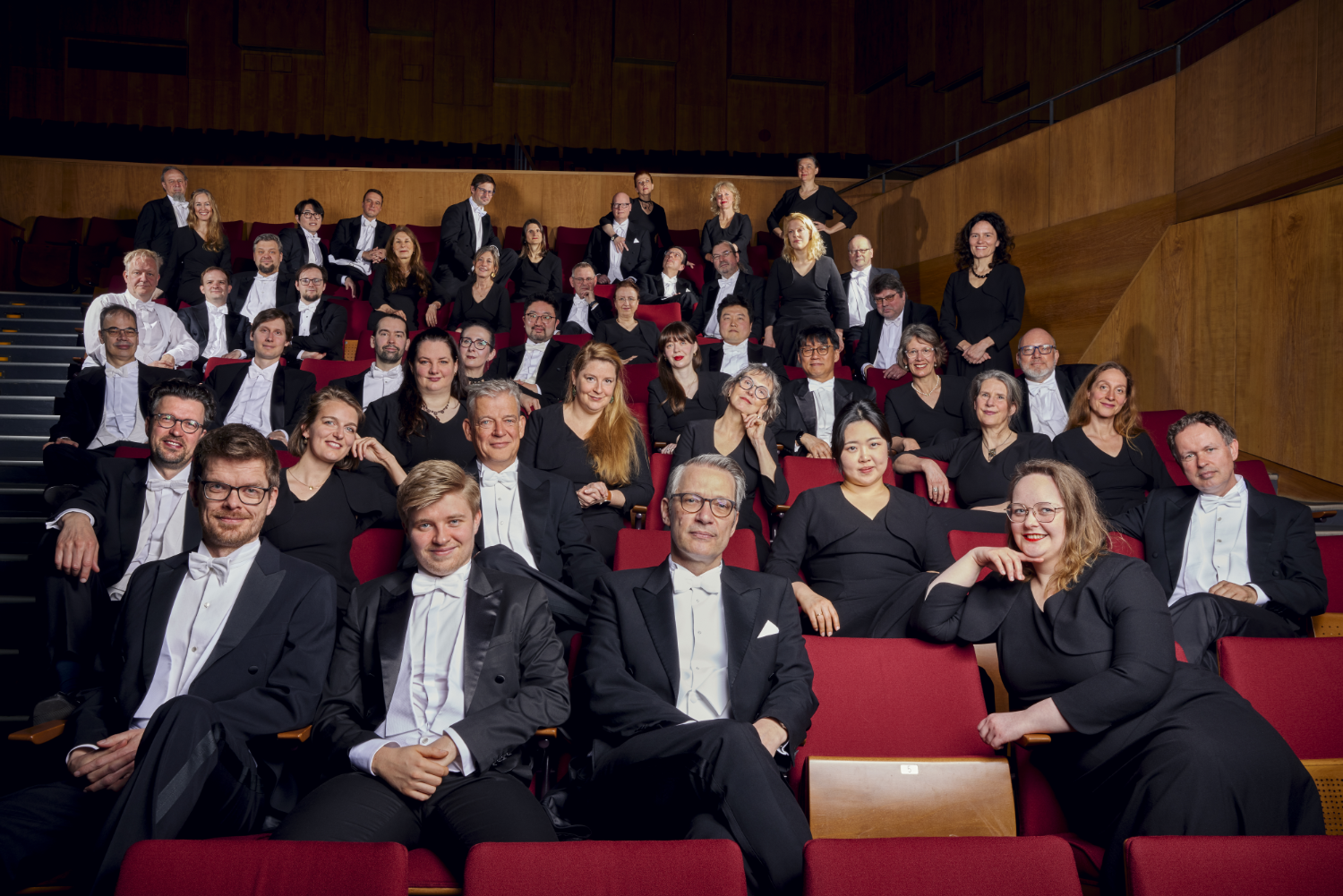
Rundfunkchor Berlin
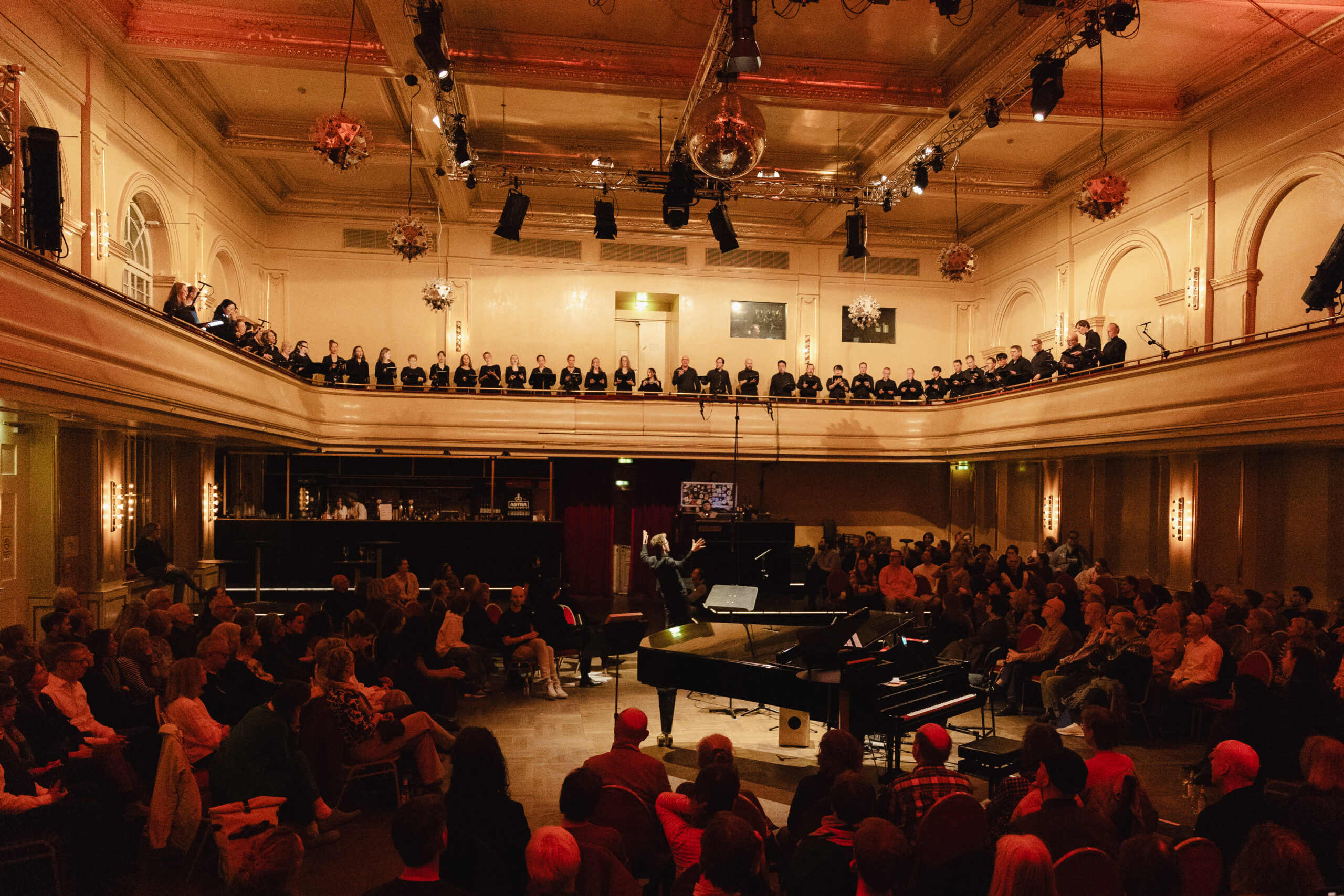
For its season finale, the RundfunkchorLounge turns to »the other half of Olympus«: female figures from antiquity and their lasting resonance today. From Antigone to Ariadne to Cassandra, a rich terrain unfolds – shaped by power, perception, and identity.
How do patriarchal narratives about women continue to inform the roles we inherit and resist? And how does music reflect, challenge, and reimagine these enduring archetypes? In both conversation and performance, ancient myth meets contemporary perspective.
Under the direction of Gijs Leenaars, the Rundfunkchor Berlin traces a musical arc from Monteverdi and Schubert to Brahms, Szymanowski, and even ABBA – revealing how images of women have been voiced, recast, and reclaimed across centuries.
Joining the discussion are author and content creator Tara-Louise Wittwer and classical philologist Prof. Dr Katharina Wesselmann, offering sharp insights into gender, myth, and the structures that shape them.
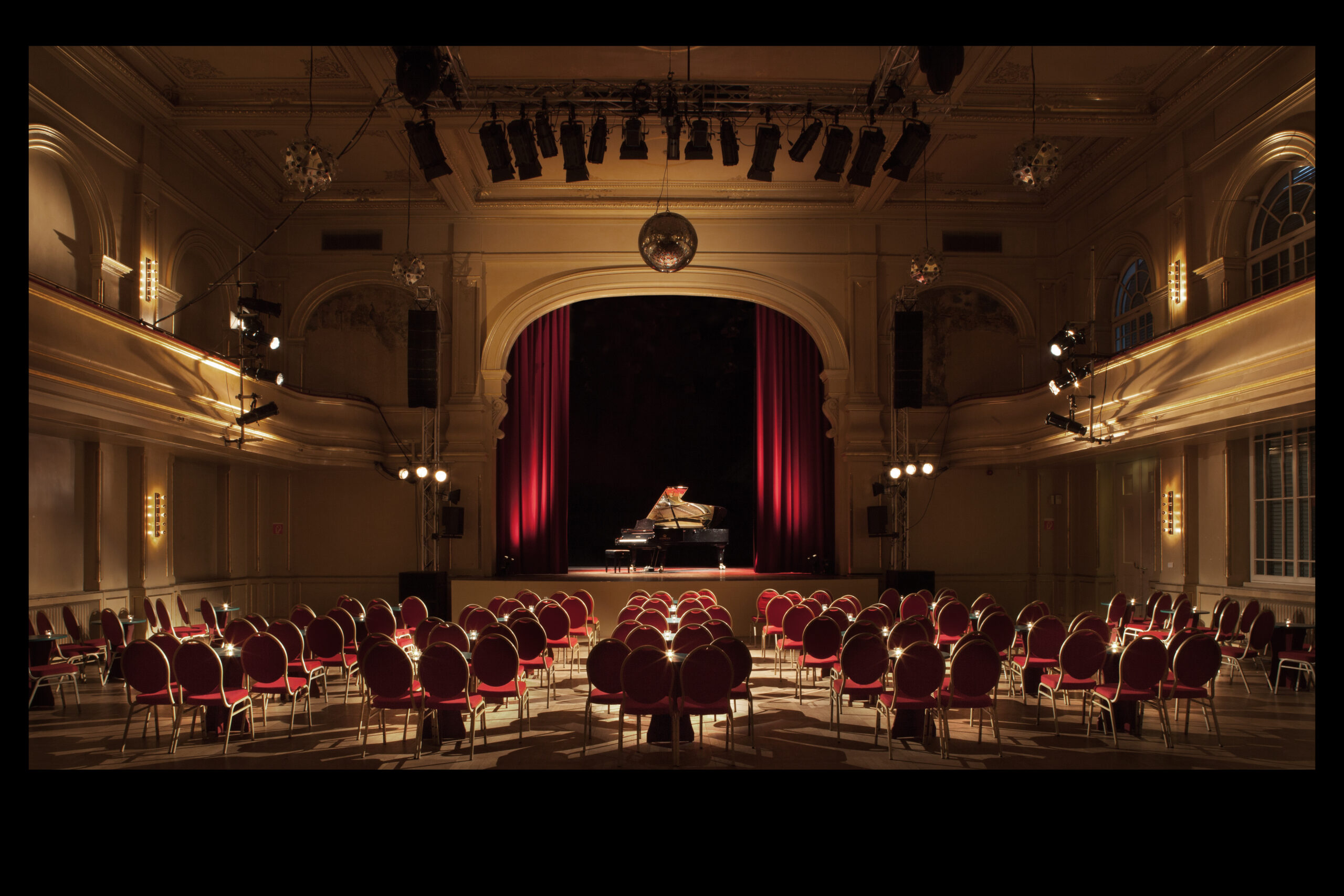
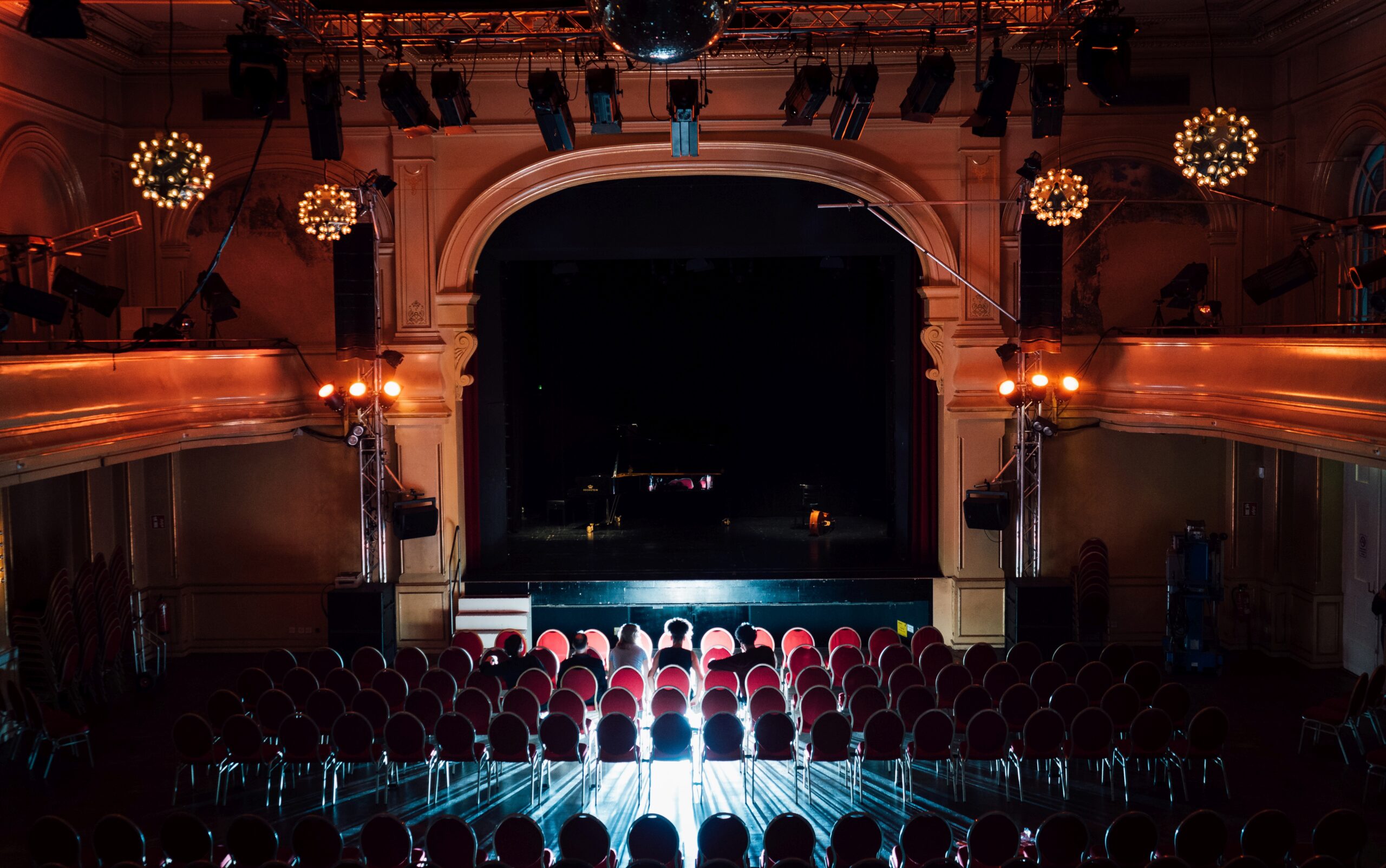
Set in the relaxed atmosphere of Heimathafen Neukölln, the RundfunkchorLounge blends music and ideas – and invites you to hear familiar stories anew.








Scendi dal paradiso,
venere, e teco guida
i pargoletti Amor, le gratie e’l riso,
oltre l’usato rida
in vista ’l ciel sereno,
il Tebro al mar Thirreno,
porti di perle adorno
invece d’acque il corno.
E i nostri canti giungano alle stelle,
poi ché l’anime belle
d’Amarilli e di Tirsi sono unite.
al nodo sacro e santo,
come a l’Olmo la vite,
o come al tronco l’edera o l’acanto.
Lyrics: attributed to Luigi Tansillo (1510–1568)
Descend from paradise,
O Venus, and with you lead forth
the little Cupids, the Graces, and laughter,
that heaven’s serene face
may smile more brightly than ever before;
and may the Tiber, to the Tyrrhenian sea,
bear a horn adorned with pearls
instead of flowing waters.
And may our songs ascend unto the stars,
since the noble souls
of Amarilli and of Tirsi are now united
in a sacred and holy bond,
as the vine is twined about the elm,
or as the ivy or acanthus clings to the tree.
Lyrics: attributed to Luigi Tansillo (1510–1568)
Schöne Welt, wo bist du? Kehre wieder,
Holdes Blütenalter der Natur!
Ach, nur in dem Feenland der Lieder
Lebt noch deine fabelhafte Spur.
Ausgestorben trauert das Gefilde,
Keine Gottheit zeigt sich meinem Blick.
Ach! Von jenem lebenwarmen Bilde
Blieb der Schatten nur zurück.
Lyrics: Friedrich Schiller, ›Die Götter Griechenlands‹ (1788)
Fair world, where are you? Return once more,
Gentle blossoming age of nature bright!
Ah, only in the fairyland of song
Does your enchanted trace still live in light.
Desolate, the meadow grieves its loss,
No deity reveals itself to me.
Alas, of that warm, living, radiant vision
Only the shadow lingers hauntingly.
Lyrics: Friedrich Schiller, ›Die Götter Griechenlands‹ (1788)
Ihr hohen Himmlischen erhöret
Der Tochter herzentströmtes Flehen:
Laßt einen kühlen Hauch des Trostes
In Oedips große Seele wehn!
Genüget, euren Zorn zu sühnen,
Dies junge Leben – nehmt es hin;
Und euer Rachestrahl vernichte
Die tief betrübte Dulderin.
Demütig falte ich die Hände –
Das Firmament bleibt glatt und rein,
Und stille ist’s, nur laue Lüfte
Durchschauern noch den alten Hain.
Was seufzt und stöhnt der bleiche Vater?
Ich ahn’s – ein furchtbares Gesicht
Verscheucht von ihm den leichten Schlummer;
Er springt vom Rasen auf – er spricht:
Ich träumte einen schweren Traum.
Schwang nicht den Szepter diese Rechte?
Doch Hoheit lös’ten starke Mächte
Dir auf, o Greis, in nicht’gen Schaum.
Trank ich in schönen Tagen nicht
In meiner großen Väter Halle,
Beim Heldensang und Hörnerschalle,
O Helios, dein golden Licht,
Das ich nun nimmer schauen kann?
Zerstörung ruft von allen Seiten:
»Zum Tode sollst du dich bereiten;
Dein irdisch Werk ist abgetan.«
Lyrics: Johann Mayrhofer (1787–1836)
You lofty gods of heaven, hear
A daughter’s heartfelt, streaming plea:
Let but a cooling breath of comfort
Across great Oedipus’s soul now be.
Let it suffice, to soothe your anger,
This youthful life – take it from me;
And may your bolt of vengeful fury
Strike down the sorrowing sufferer – me.
In humble prayer I fold my hands –
The firmament lies clear and pure,
And all is still; soft, gentle breezes
Still wander through the ancient wood.
Why sighs and groans my pallid father?
I sense it – a dreadful sight
Has driven sleep away in terror;
He starts from off the grass – he speaks:
I dreamt a dream of heavy weight.
Did not this hand once wield the sceptre?
Yet mighty powers have stripped your greatness,
O aged king, to empty foam.
Did I not once, in fairer days,
Within my fathers’ noble hall,
To songs of heroes, horns resounding,
O Helios, drink your golden light –
That I may never gaze on now?
Destruction calls from every side:
»You must prepare yourself for death;
Your earthly task is brought to end.«
Lyrics: Johann Mayrhofer (1787–1836)
ἀλλ᾽ οὐδὲν αὐτῷ τῶν ἐμῶν μ᾽ εἴργειν μέτα. (48)
οὔτ᾽ ἂν κελεύσαιμ᾽ οὔτ᾽ ἄν, εἰ θέλοις ἔτι (69)
πράσσειν, ἐμοῦ γ᾽ ἂν ἡδέως δρῴης μέτα.
ἀλλ᾽ ἴσθ᾽ ὁποῖά σοι δοκεῖ, κεῖνον δ᾽ ἐγὼ
θάψω· καλόν μοι τοῦτο ποιούσῃ θανεῖν.
φίλη μετ᾽ αὐτοῦ κείσομαι, φίλου μέτα,
ὅσια πανουργήσασ᾽. ἐπεὶ πλείων χρόνος
ὃν δεῖ μ᾽ ἀρέσκειν τοῖς κάτω τῶν ἐνθάδε.
ἐκεῖ γὰρ αἰεὶ κείσομαι· σοὶ δ᾽, εἰ δοκεῖ,
τὰ τῶν θεῶν ἔντιμ᾽ ἀτιμάσασ᾽ ἔχε.
Lyrics: Sophocles, »Antigone«, Verse 48 and 69f., c. 442 BC
He (Creon) has no right to separate me from my loved ones.
I do not kneel before you (Ismene). Even if you change your mind,
I will gladly not accept your help.
Keep your illusions. I will bury him alone.
It pleases me to do this, even if I will die.
I will lie beside him, beloved with beloved.
In holy shame. For a long time
Those in the Underworld will rejoice over me as one of them.
Because there I will rest forever. If you want it your way, go ahead
Dishonour what the gods worship.
Lyrics: Sophocles, »Antigone«, Verse 48 and 69f., c. 442 BC, translation by Konstantia Gourzi
Lasciatemi morire.
E chi volete voi
che mi conforte
in così dura sorte,
in così gran martire?
Lasciatemi morire.
O Teseo, o Teseo mio,
si che mio ti vo’ dir
che mio pur sei,
benchè t’involi, ahi crudo,
a gl’occhi miei.
Volgiti Teseo mio,
volgiti Teseo, o Dio,
volgiti indietro a rimirar colei
che lasciato ha per te la patria e’l regno,
e in queste arene ancora,
cibo di fere dispietate e crude
lascerà l’ossa ignude.
O Teseo, o Teseo mio,
se tu sapessi, o Dio,
se tu sapessi, ohimè,
come s’affanna la povera Arianna;
Forse, forse pentito
rivolgeresti ancor la prora al lito.
Ma con l’aure serene
tu te ne vai felice, ed io qui piango.
A te prepara Atene
liete pompe superbe, ed io rimango,
cibo di fere in solitarie arene.
Te l’uno e l’altro tuo vecchio parente
stringeran lieti, ed io più non vedròvvi,
o madre, o padre mio.
Dove, dov’è la fede
che tanto mi giuravi?
Così nel’alta sede
tu mi ripon degl’ avi?
Son queste le corone
onde m’adorn’ il crine?
Questi gli scettri sono,
queste le gemme e gl’ori?
Lasciarmi in abbandono
a fera che mi stracci e mi divori?
Ah Teseo, ah Teseo mio,
lascerai tu morire
invan piangendo, invan gridando aita
la misera Arianna
ch’a te fidòssi e ti diè gloria e vita?
Ahi, che non pur rispondi,
ahi, che più d’aspe è sordo a miei lamenti!
O nembi, o turbi, o venti
sommergetelo voi dentr’a quell’onde!
Correte orche e balene,
e de le membra immonde
empiete le voragini profonde!
Che parlo, ahi, che vaneggio?
Misera, ohimè, che chieggio?
O Teseo, o Teseo mio,
non son, non son quell’io,
non son quell’io che i feri detti sciolse;
parlò l’affanno mio,
parlò il dolore,
parlò la lingua si ma non già il core.
Lyrics: Ottavio Rinuccini (1563–1621)
Let me die.
And whom would you have
to comfort me
in such a cruel fate,
in such great torment?
Let me die.
O Theseus, O my Theseus,
yes, mine I call you,
for mine you are,
though you flee, ah cruel one,
from my sight.
Turn back, my Theseus,
turn back, O Theseus, O God,
turn back to look upon her
who for you left her homeland and her crown,
and here upon these sands
shall leave her bare bones
as food for pitiless and savage beasts.
O Theseus, O my Theseus,
if you but knew, O God,
if you but knew, alas,
how the poor Ariadne suffers;
perhaps, perhaps in sorrow
you would yet turn your prow again to shore.
But with gentle breezes
you go your way in joy, while I remain weeping.
For you, Athens prepares
festive, splendid triumphs, and I am left
as food for beasts upon these lonely sands.
Your aged parents both
shall clasp you gladly, and I shall see you no more,
O mother, O my father.
Where, oh where is the faith
that you so often swore to me?
Is it thus, in that lofty seat,
you place me among your ancestors?
Are these the crowns
with which you would adorn my hair?
Are these the sceptres,
these the jewels and the gold?
To leave me abandoned
to a beast that rends and devours me?
Ah Theseus, ah my Theseus,
will you let die
in vain weeping, in vain crying for aid,
the wretched Ariadne
who trusted you and gave you glory and life?
Alas, you do not answer,
alas, more deaf than serpents to my lament!
O clouds, O storms, O winds,
plunge him beneath those waves!
Come, whales and monsters of the deep,
and with his unclean limbs
fill the vast and yawning chasms!
What am I saying? Alas, what frenzy?
Wretched me, what is it I ask?
O Theseus, O my Theseus,
I am not, I am not that self,
not that self who loosed such cruel words;
it was my anguish that spoke,
it was my grief that spoke,
the tongue spoke, yes – but not the heart.
Lyrics: Ottavio Rinuccini (1563–1621)
Auch das Schöne muss sterben! Das Menschen und Götter bezwinget,
Nicht die eherne Brust rührt es des stygischen Zeus.
Einmal nur erweichte die Liebe den Schattenbeherrscher,
Und an der Schwelle noch, streng, rief er zurück sein Geschenk.
Nicht stillt Aphrodite dem schönen Knaben die Wunde,
die in den zierlichen Leib grausam der Eber geritzt.
Nicht errettet den göttlichen Held die unsterbliche Mutter,
Wenn er, am skäischen Tor fallend, sein Schicksal erfüllt.
Aber sie steigt aus dem Meer mit allen Töchtern des Nereus,
Und die Klage hebt an um den verherrlichten Sohn.
Siehe, da weinen die Götter, es weinen die Göttinnen alle,
Dass das Schöne vergeht, dass das Vollkommene stirbt.
Auch ein Klaglied zu sein im Mund der Geliebten, ist herrlich,
Denn das Gemeine geht klanglos zum Orkus hinab.
Lyrics: Friedrich Schiller (1759–1805), »Nänie« (1800)
Even beauty must perish! What conquers both mortals and gods
Moves not the brazen breast of the Stygian Zeus.
Only once did love soften the lord of the shadows,
Yet even at the threshold, stern, he recalled his gift.
Not even Aphrodite can heal the fair boy’s wound,
Which the savage boar tore cruelly into his graceful flesh.
Nor does the immortal mother rescue the godlike hero
When, falling at the Scaean gate, he fulfils his fate.
Yet she rises from the sea with all the daughters of Nereus,
And the lament begins for the glorified son.
Behold, the gods are weeping, all the goddesses weep,
That beauty must fade, that perfection must die.
Yet even to be a song of mourning upon the lips of the beloved is glorious;
For what is common descends to Orcus without a sound.
Lyrics: Friedrich Schiller (1759–1805), »Nänie« (1800)
I had not known it, but I lived
inside my mother’s head – her face God-like,
white, a cast. Neck coiled in a snake,
ready to strike. My own eyes
slits beneath the heavy chalked lids.
How did I come then,
to haul myself up the scaffolding she’d left,
fist after fist, to crawl and stretch –
the glowing oval of her mind
hanging like a moon above me.
I cracked the crown –
pressed out and through, black bird
singing in my chest,
no light, no breath, my voice
still clinging to her lips.
Lyrics: Emily Kendal Frey, 2013
Slońce na mrocznym szafirze niebiosów kona;
I pelznie szara mroku pleśń.
Wiatr cichą, załzawioną bólem pieśń
Gra na zwichrzonych strunach moich włosów.
Pokorna bólem, idę w poniewierce śladami dziecka!
Już do swych gniazd wracają ptaki.
Zimne oczy gwiazd patrzą w me biedne okrwawione serce!
A!
W mroku mię płacz twój doleciał, dziecino,
Idę więc, idę w pustkę wycie/agnąwszy dłonie!
I pustkę tulę na zmartwiałym łonie!
Morze szlochem w dal uderza siną.
Wstępuję w Nocy bezgłośną Nirwanę.
Gdzie jeno serce dzwoni, serce łzami szklane.
Lyrics: Zofia Grzybowska-Szymanowska (1898–1946)
The sun upon the dark sapphire of heaven is dying;
And grey decay of darkness spreads and creeps.
The wind, a quiet song of tears and sorrow,
Plays on the tangled strings of my wild hair.
Humbled by pain, I wander, cast aside, in the footsteps of a child!
Already to their nests the birds return.
The cold eyes of the stars gaze into my poor, blood‑stricken heart!
Ah!
Through the darkness your weeping reached me, little child,
So I go, I go – into the void, with outstretched, yearning hands!
And I embrace the emptiness upon my numbing breast!
The sea, in sobbing, beats its ashen waves afar.
I enter into Night’s soundless Nirvana,
Where only the heart resounds – a heart of glass, with tears.
Lyrics: Zofia Grzybowska-Szymanowska (1898–1946)
Down in the street they’re all singing and shouting,
Staying alive though the city is dead;
Hiding their shame behind hollow laughter
While you are crying alone in your bed.
Pity, Cassandra, that no one believed you
But, then again, you were lost from the start;
Now we must suffer and sell our secrets,
Bargain, playing smart, aching in our hearts.
Sorry Cassandra, we misunderstood,
Now the last days are dawning.
Some of us wanted, but none of us would
Listen to words of warning.
But on the darkest of nights
Nobody knew how to fight,
And we were caught in our sleep. Ah …
Sorry Cassandra, I didn’t believe
You really had the power;
We only saw it as dreams you would weave
Until the final hour.
So in the morning your ship will be sailing,
Now that your father and sister are gone
There is no reason for you to linger,
You’re grieving deeply, but still moving on.
You know the future is casting a shadow. [Doom]
No one else sees it, but you know your fate.
Packing your bags, being slow and thorough
Knowing, though you’re late, that ship is sure to wait.
Sorry Cassandra, we misunderstood,
…
I watched the ship leaving harbour at sunrise,
Sails almost slack in the cool morning rain.
She stood on deck, just a tiny figure,
Rigid and restrained, blue eyes filled with pain.
Sorry Cassandra, we misunderstood,
…
Lyrics: Benny Andersson and Björn Ulvaeus
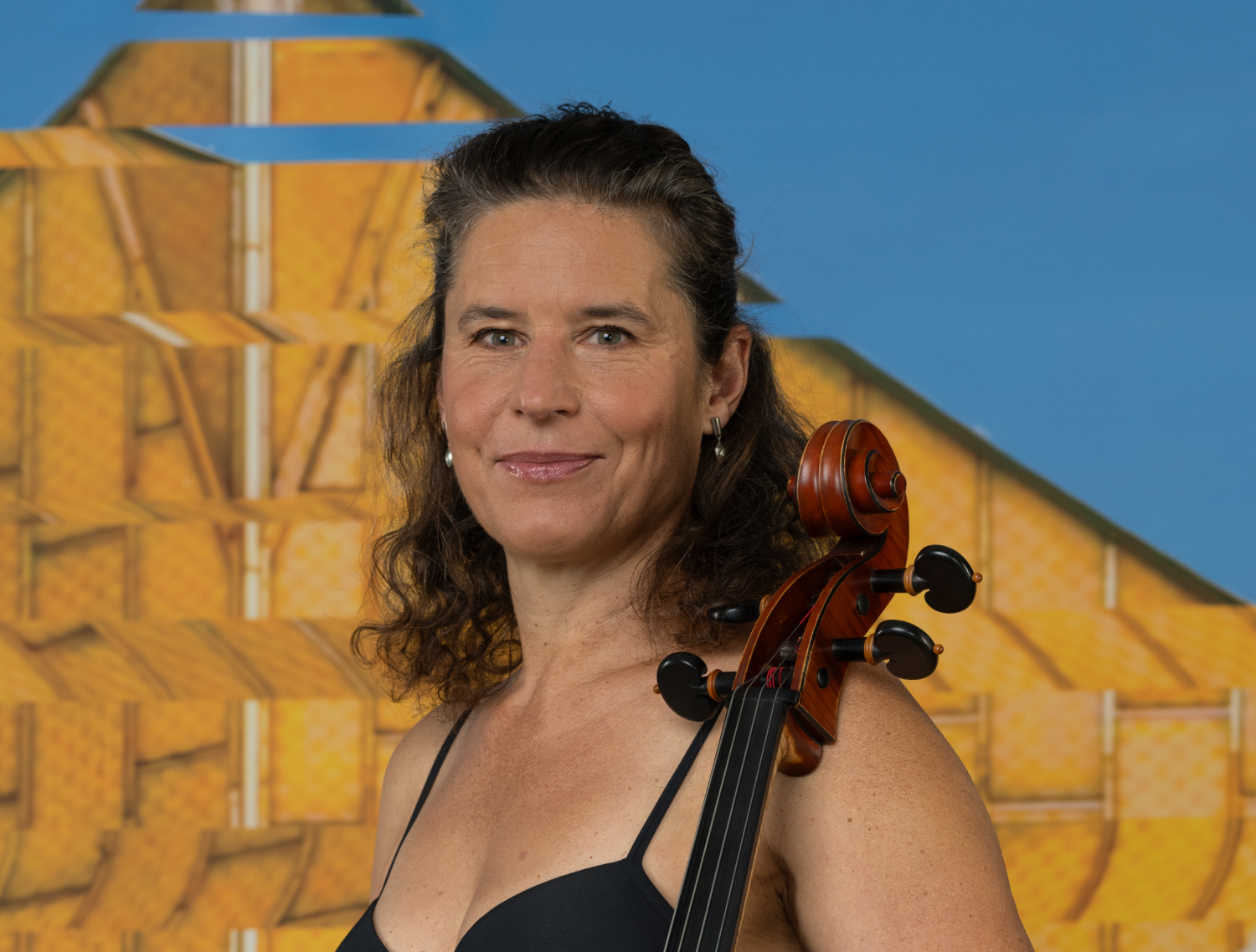
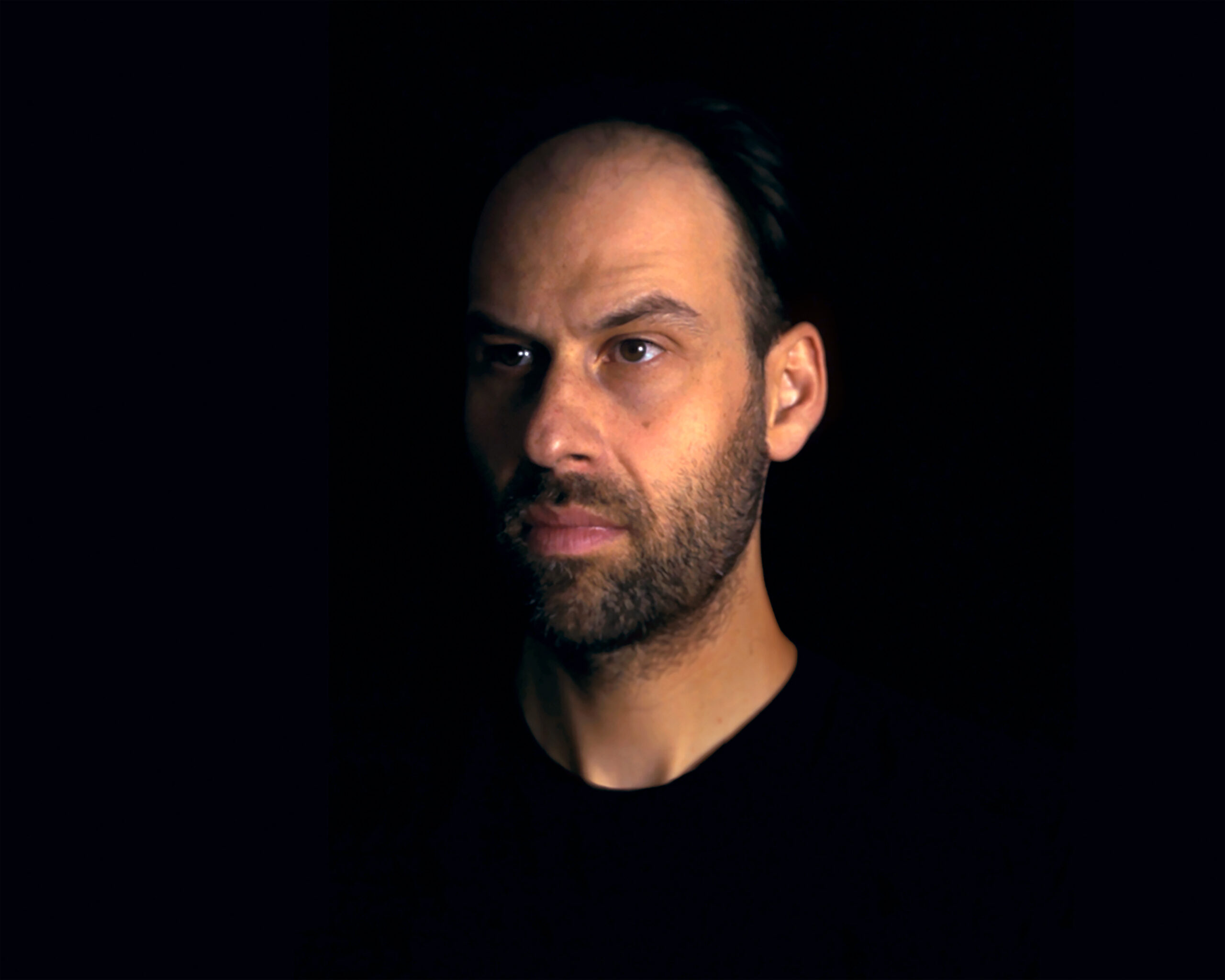
Tara-Louise Wittwer, also known as »wastarasagt,« is a cultural studies scholar, author, SPIEGEL columnist, and content creator based in Berlin. On her social media platforms, she engages with feminist topics, focusing in particular on how pop culture and media shape our self-image. She discusses internalized misogyny and the ongoing reproduction of traditional gender roles. With her successful TikTok format »TikToxic,« she analyzes and exposes misogynistic content online. With her books »Sorry, aber…« (Sorry, but…) and »Nemesis’ Töchter,« (Nemesis’ Töchter) both of which reached #1 on the SPIEGEL bestseller list, she has also recently established herself as a successful author. Her last three bestselling books were accompanied by sold-out tours across Germany, Austria, and Switzerland.
Katharina Wesselmann is a Professor of Classical Philology at the University of Potsdam. After studying Greek and Latin philology as well as art history in Tübingen, Cologne, and Basel, she first completed Swiss teacher training (2008) while working on her doctoral dissertation on »Mythical Narrative Structures in Herodotus’ Histories« (2010). While teaching Greek and Latin at various schools in Basel, she completed her habilitation as part of the Basel Iliad Commentary project with a contribution on Book 7 of Homer’s Iliad (2018). In 2019, she accepted a professorship in the didactics of classical languages at Kiel University (Christian-Albrechts-Universität zu Kiel), and in 2023 she moved to the University of Potsdam. Her research focuses on Greek historiography and epic, as well as gender studies, the didactics of classical languages, and the history and social connotations of the subjects Latin and Greek.
Tessniem Kadiri, born in Germany’s Ruhr region to Moroccan immigrant parents, began her career in journalism as a teenager. Today, she works as a reporter and presenter for the renowned ARD programmes Weltspiegel and neuneinhalb, as well as an author and host for the WDR Newsroom. She also presents the international FUNK format ATLAS, which won the 2025 Grimme Award. Beyond broadcasting, she writes articles and columns and leads workshops. In 2024, medium magazin named her one of Germany’s top 30 under 30 journalists.
The concert will be recorded by Deutschlandfunk Kultur and broadcast on 9 July 2026 at 8 pm.

Heimathafen Neukölln has been an established venue for cultural events in Berlin since 2009. From theatre performances and concerts to political debates, this venue in the heart of Neukölln offers its audience a diverse programme. Originally founded by a collective of ten women, Heimathafen sees itself as a ‘laboratory’ for a wide variety of formats. This makes it the ideal venue for our RundfunkchorLounges, which not only delight audiences with surprising musical elements, but also provide a space for stimulating conversation.
Heimathafen Neukölln
Karl-Marx-Straße 141
12043 Berlin
Deutschland

© Benjamin Jenak

© Heimathafen Neukölln

Bleiben Sie immer auf dem Laufenden mit aktuellen Terminen, Konzerteinblicken und Interviews