

»Super flumina Babylonis« (Psalm 137)
for eight-part choir a cappella
Everyone needs water. Access to clean drinking water is a fundamental human right – yet more than 800 million people around the world do still not have access to it. And because water is such a vital resource, it has also become a highly profitable one, often entangled in murky and controversial business practices. The first RundfunkchorLounge of the 2026/27 season sets out to explore the role of water in today’s economic and political landscape.
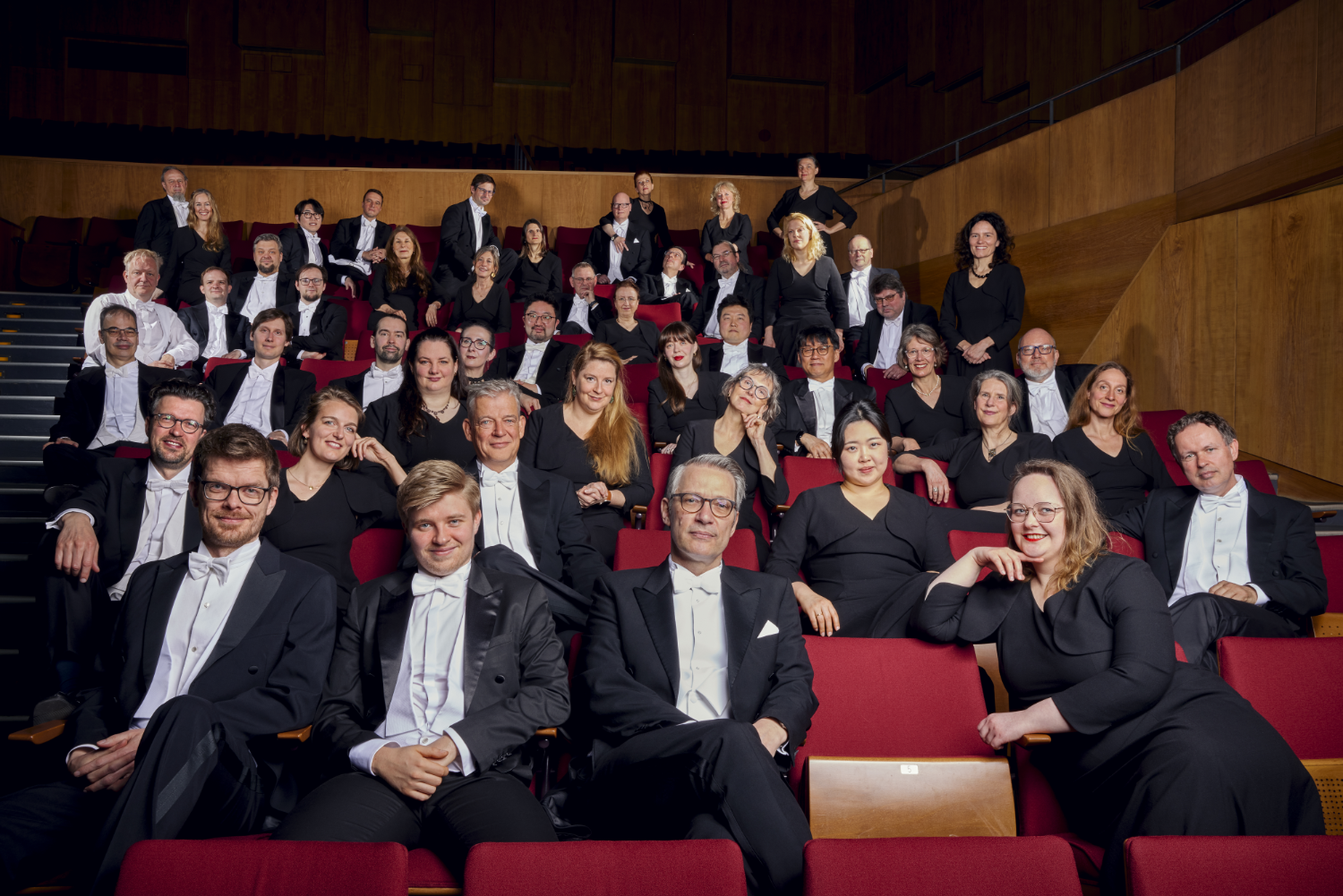
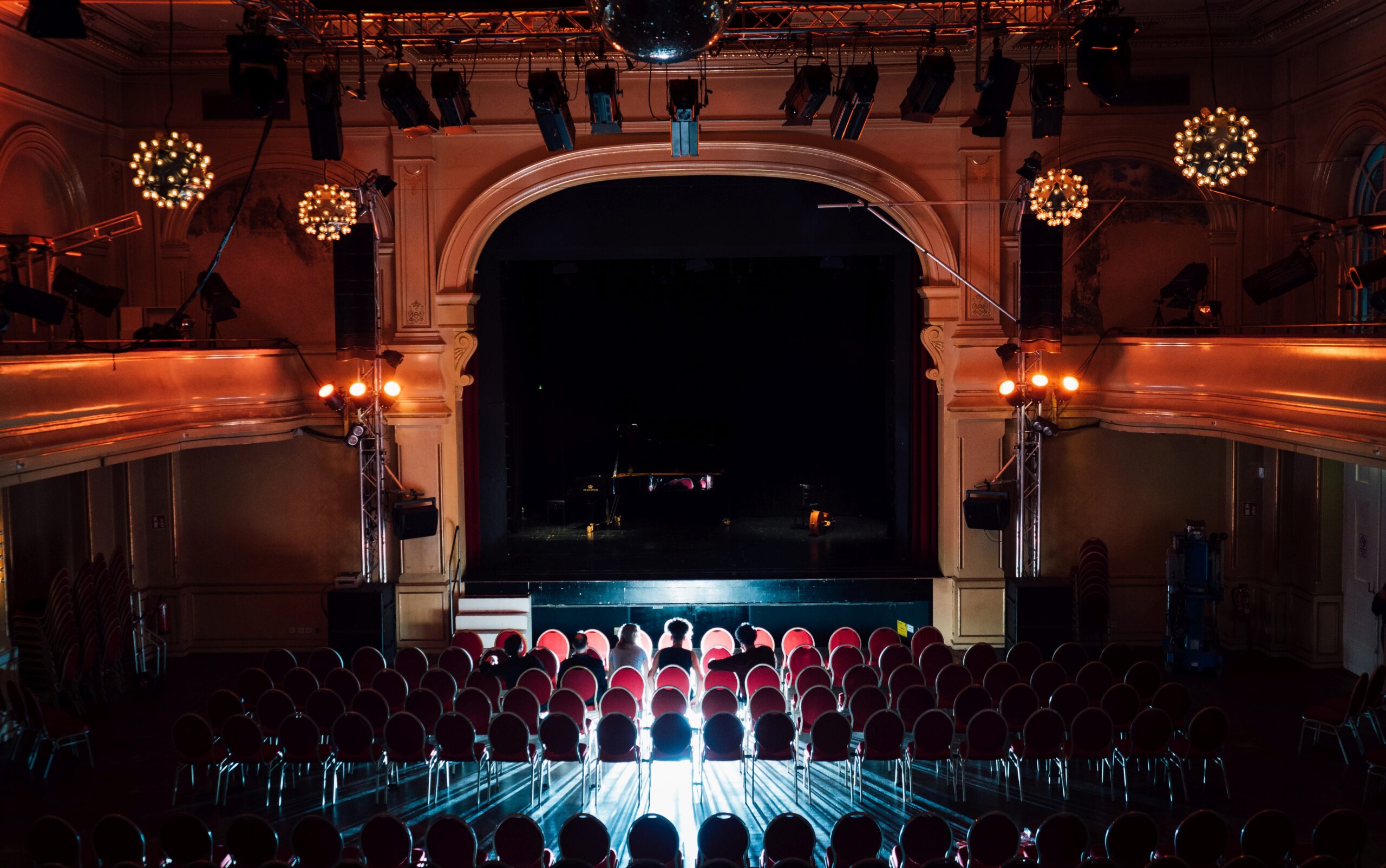
Stepping beyond the concert hall and into the heart of society, the Rundfunkchor Berlin welcomes you to Heimathafen Neukölln – because music and politics are inseparable. Curated by Chief Conductor Gijs Leenaars, the musical programme revolves around the theme of water, complemented by discussions with invited experts. Among the guests is Dr Laura von Vittorelli, Senior Researcher for Environmental Law and Governance at the Oeko-Institut, whose expertise includes national and European water law and policy. The second guest is Mika Schachenmayr, a spokesperson and climate activist for Fridays for Future, campaigning for a phase-out of fossil fuels and global justice. The repertoire includes works such as Brahms’s setting of »Es rinnen die Wasser Tag und Nacht«. After the main programme, you are warmly invited to stay on, unwind at the Heimathafen bar, and round off the evening with relaxed lounge music.





Super flumina Babylonis
illic sedimus et flevimus,
dum recordaremur tui Sion.
Illic interrogaverunt nos,
qui captivos abduxerunt nos,
verba cantionum.
Quomodo cantabimus canticum Domini
in terra aliena?
In salicibus in medio eius suspendimus
organa nostra.
Text from: Psalm 137 (Psalm 136 in the latin vulgata)
By the waters of Babylon,
there we sat down and wept,
when we remembered Zion.
There they questioned us,
those who had let us into captivity,
about the words of our songs.
How shall we sing the Lord’s song
in a foreign land?
On the willows there we hung up
our lyres.
Text from: Psalm 137 (Psalm 136 in the latin vulgata)
La mer est plus belle
Que les cathédrales,
Nourrice fidèle,
Berceuse de râles,
La mer sur qui prie
La Vierge Marie!
Elle a tous les dons
Terribles et doux.
J’entends ses pardons
Gronder ses courroux.
Cette immensité
N’a rien d’entêté.
Oh! si patiente,
Même quand méchante!
Un souffle ami hante
La vague, et nous chante:
«Vous, sans espérance,
Mourez sans souffrance!»
Et puis, sous les cieux
Qui s’y rient plus clairs,
Elle a des airs bleus,
Roses, gris et verts …
Plus belle que tous,
Meilleure que nous!
Text: Paul Verlaine (1833–1896)
Fairer is the sea
Than the minster high,
Faithful nurse is she,
And last lullaby,
And the virgin prays
Over the sea’s ways.
Gifts of grief and guerdons
From her bounty come,
And I hear her pardons
Chide her angers home;
Nothing in her is
Unforgivingness.
She is piteous,
She the perilous!
Friendly things to us
The wave sings to us:
»You whose hope is past,
Here is peace at last«.
And beneath the skies,
Brighter-hued than they,
She has azure dyes,
Rose and green and grey.
Better is the sea
Than all fair things or we.
Text: Paul Verlaine (1833–1896); translation by Arthur Symons (1865–1945)
I had a bad dream
I stood by the sea
Suddenly the sky went black
and the sun burned up
Birds screeching in the sky
The beating of their wings warning us of
evil times to come.
[wordless]
Text: Rosa Taikon (1926–2017), transpated from Swedish by Linda Schenck
La noche de ojos de caballo que tiemblan en la noche,
la noche de ojos de agua en el campo dormido,
está en tus ojos de caballo que tiembla,
está en tus ojos de agua secreta.
Ojos de agua de sombra,
ojos de agua de pozo,
ojos de agua de sueño.
El silencio y la soledad,
como dos pequeños animales a quienes guía la luna,
beben en esos ojos,
beben en esas agua.
Si abres los ojos,
se abre la noche de puertas de musgo,
se abre el reino secreto del agua
que mana del centro de la noche.
Y si los cierras,
el río,
te inunda por dentro, avanza, te hace oscura:
la noche moja riberas en tu alma.
Text: Octavio Paz (1914–1998)
Night with the eyes of a horse that trembles in the night,
night with eyes of water in the field asleep
is in your eyes, a horse that trembles,
is in your eyes of secret water.
Eyes of shadow-water,
eyes of well-water,
eyes of dream-water.
Silence and solitude,
two little animals moon-led,
drink in your eyes,
drink in those waters.
If you open your eyes,
night opens, doors of musk,
the secret kingdom of the water opens
flowing from the center of night.
And if you close your eyes,
a river fills you from within,
flows forward, darkens you:
night brings its wetness to beaches in your soul.
Text: Octavio Paz (1914–1998)
[Es beginnt zu regnen.]
P
mh
Plö – Plötzlicher
Ha
[Starker Regen fällt.]
(Z)a
Abendschauer
Schauer am Sommerabend
[Die großen Regentropfen, die auf dem Boden abprallen, scheinen zu tanzen]
Schauer, oh Sommerabend
Plötzlich Schauer
(Z)a
[Plötzlicher Schauer löst langsam sich auf ein Nieselregen.]
Za – Shito
[Ripples von Regentropfen auf dem Boden.]
Löst langsam sich auf
Nieselregen
[Der Regen hört auf und die Nacht bricht herein.]
Oh strahlender Herbstmond oh
[Der Mond schwebt am Himmel]
Oh strahlender Herbstmond oh
[Ein Kind greift nach dem Mond.]
Hol ihn mir herunter
Mond – oh
[Das Kind will den Mond, aber seine Hände können ihn nicht erreichen.]
Mond – Schau
Hol ihn mir herunter
[Die Hände des Kindes scheinen den Mond zu erreichen.]
Hol ihn mir herunter
[Der Mond steht sehr hoch oben.]
Schau
[Das Kind weint.]
Hol ihn mir, strahlender Herbstmond
weint das Kind.
shi.
Two Japanese haiku by Kobayashi Issa were used as the text for this piece. A haiku is a traditional Japanese short poem that incorporates almost all the elements of the seasons. Aoi Hasegawa chose the haiku about the summer rain and the autumn moon and sought to link the two scenes together. The heavy rain of summer evenings turns to drizzle. In autumn, a large full moon appears in the clear night sky. A child asks his father to fetch the moon down for him. ‘Petrichor’ is the scent of the air after the rain, which links the two scenes: the evening rain shower and the night sky.
In the Japanese language, there are a variety of onomatopoeic expressions used to describe rain. For example, heavy rain is sometimes described as »sah-sah« and light rain as »shito-shito«. Here, Aoi Hasegawa has attempted to describe the sound of rain directly by using both Japanese onomatopoeia and various consonants in the German text.
Children long for the autumn moon and reach out for it. We, too, feel as though we could actually reach the moon if we looked up at the sky and reached out for it. In reality, however, the moon and we are very far apart. Aoi Hasegawa has sought to depict the physical distance between the moon and the child – a distance that is almost, but not quite, within reach – and the tranquil atmosphere, as if the air were still.
[It’s starting to rain.]
P
mh
Plö – plötzlicher [Sudden]
Ha
[Heavy rain is falling.]
(Z)a
Evening Showers
Showers on a Summer Evening
[The large raindrops bouncing off the ground seem to be dancing]
A shower, oh summer evening
Suddenly, a shower
(Z)a
[A sudden shower slowly gives way
to a drizzle.]
Za – Shito
[Ripples from raindrops on the ground.]
Slowly clearing up
Drizzle
[The rain stops and night falls.]
Oh, radiant autumn moon, oh
[The moon floats in the sky]
Oh, radiant autumn moon, oh
[A child reaches for the Moon.]
Get him down for me
Moon – oh
[The child wants the moon, but his hands can’t reach it.]
Moon – Take a look
Get him down for me
[The child's hands seem to reach the moon.]
Hol ihn mir herunter
[The moon is very high in the sky.]
Take a look
[The child is crying.]
Bring it to me, radiant autumn moon
the child cries.
shi.
Ice!
So, you dislike ice!!!
But glaciers, dear friend – ice is only another form of terrestrial love. I am astonished to hear you speak so unbelievingly of God’s glorious crystal glaciers. »They are only pests,« you say, and you think them »wrong in temperature,« and they lived in »horrible times,« and you don’t care to hear about them.
You confuse me. You have taught me here and encouraged me to read the mountains. Now you
will not listen. Next summer you will be converted – you will be iced then.
I have been up Nevada to the top of Lyell and found a living glacier; (but you don’t want that) and I have been in the canyon above, and I was going to tell you the beauty there; (but it is all ice-born beauty, and too cold for you) and I was going to tell about the making of the South Dome; (but ice did that too) and about the hundred lakes that I found; (but the ice made them, every one) and I had some groves to speak about – groves of surpassing loveliness in new pathless Yosemite; (but they all grew upon glacial drift – and I have nothing to send but what is frozen or freezable).
Glaciers came down from heaven, they were angels with folded wings, white wings of snowy bloom. Locked hand in hand, the little spirits did nobly; they were willing messengers to whom God spoke »well done« from heaven, calling them back to their homes in the sky.
Next summer you will be converted – you will be iced then!
Text: Letter from the naturalist and philosopher John Muir (1838–1914) to his mentor Jeanne C. Smith Carr (1825–1903), dated 11 December 1871 (from Yosemite)
What power art thou, who from below
Hast made me rise unwillingly and slow
From beds of everlasting snow?
See’st thou not how stiff and wond’rous old
Far unfit to bear the bitter cold.
I can scarcely move or draw my breath.
Let me, let me freeze again to death.
Text: John Dryden (1631–1700)
[Soprano]
»O, ihr Wolken, gebet Wasser
Dass ich weinen, weinen kann!
Meine Äuglein, die sind nasser
Nasser als der Donaufluss!
Ach, in Trauern muss ich leben,
Ach, wie hab’ ich’s denn verschuldet?
Weil mir’s hat mein Schatz aufgeben,
Muss ich’s leiden mit Geduld.
Wenn ich zwei Taubenflügel hätt’,
Wollt’ fliegen über die ganze Welt,
Wollt’ fliegen über Berg und Tal,
Hin wo mein Herzallerliebster wär’!«
[Chorus]
Ach, Scheiden, ach, Scheiden!
Wer hat doch das Scheiden erdacht?
Der hat ihr jung frisch Herze
So frühzeitig traurig gemacht!
Text: Folk song
[Soprano]
Oh, you clouds, send down your water,
That my tears may freely teem!
For my eyes are growing wetter,
Wetter than the Danube’s stream!
Text: Folk song
Oh, in sorrows now I must live,
How did I deserve this blow?
For this task my sweetheart did give:
Patience – must endure it now.
If I had two wings like a dove,
’cross the whole world I would fly,
Over mountains, over valleys,
Meet my dear love eye to eye!«
[Chorus]
Oh, parting, oh, parting!
He who made the parting a thing
Has made her young, fresh heart,
too early too sad on a whim.
Es rinnen die Wasser Tag und Nacht,
Deine Sehnsucht wacht, deine Sehnsucht wacht.
Du gedenkest der vergangenen Zeit,
Die liegt so weit, die liegt so weit,
Du siehst hinaus in den Morgenschein
Und bist allein, und bist allein.
Es rinnen die Wasser Tag und Nacht,
Deine Sehnsucht wacht, deine Sehnsucht wacht.
Text: Franz Kugler (1808–1858)
The waters flow by night and day,
Your longing remains, your longing does stay.
You remember the times gone by,
So far away, so far away,
You watch the morning light be shown
And are alone, and are alone.
The waters flow by night and day,
Your longing remains, your longing does stay.
Text: Franz Kugler (1808–1858)
I’ll be your bridge over troubled water,
When you’re down,
I will carry you.
Like a bridge over troubled water,
I will lay me down.
When you’re weary, feeling small,
When tears are in your eyes
I will dry them all;
I’m on your side.
When times get rough
And friends just can’t be found,
Like a bridge over troubled water
I will lay me down.
When you’re down and out
When you’re on the street, my Lord,
When evening falls so hard
I will comfort you.
I’ll take your part
When darkness comes
And pain is all around,
Like a bridge over troubled water
I will lay me down.
I’ll be your bridge over troubled water,
When you’re down,
I will carry you
Like a bridge over troubled water,
I will lay me down.
Sail on, silvergirl,
Sail on by.
Your time has come to shine.
All your dreams are on their way.
See how they shine.
If you need a friend,
Look around, I’m sailing right behind.
Like a bridge over troubled water
I will ease your mind.
I’ll be your bridge over troubled water,
When you’re down,
I will carry you
Like a bridge over troubled water,
I will lay me down.
Text: Paul Simon (*1941)
Alone in the night
On a dark hill
With pines around me
Spicy and still,
And a heaven full of stars
Over my head,
White and topaz
And misty red;
Myriads with beating
Hearts of fire
The aeons
Cannot vex or tire;
The dome of heaven
Like a great hill …
I know I
Am honored to be
Witness
Of so much majesty.
Text: Sara Teasdale (1884–1933)
Vivian Perkovic is a journalist whose work spans culture, society and geopolitics. Her interests range from music, literature, theatre, dance and pop culture to migration, digital change and the intersections of technology and popular culture – including, in recent years, artificial intelligence.
She works as an editor and presenter at Deutschlandradio, contributing to the programmes »Tonart am Nachmittag« and »Fazit«. Since 2017, she has also presented the daily 3sat magazine »Kulturzeit«. In 2022, she and the programme’s editorial team received the German Television Award in the »Best Information« category.
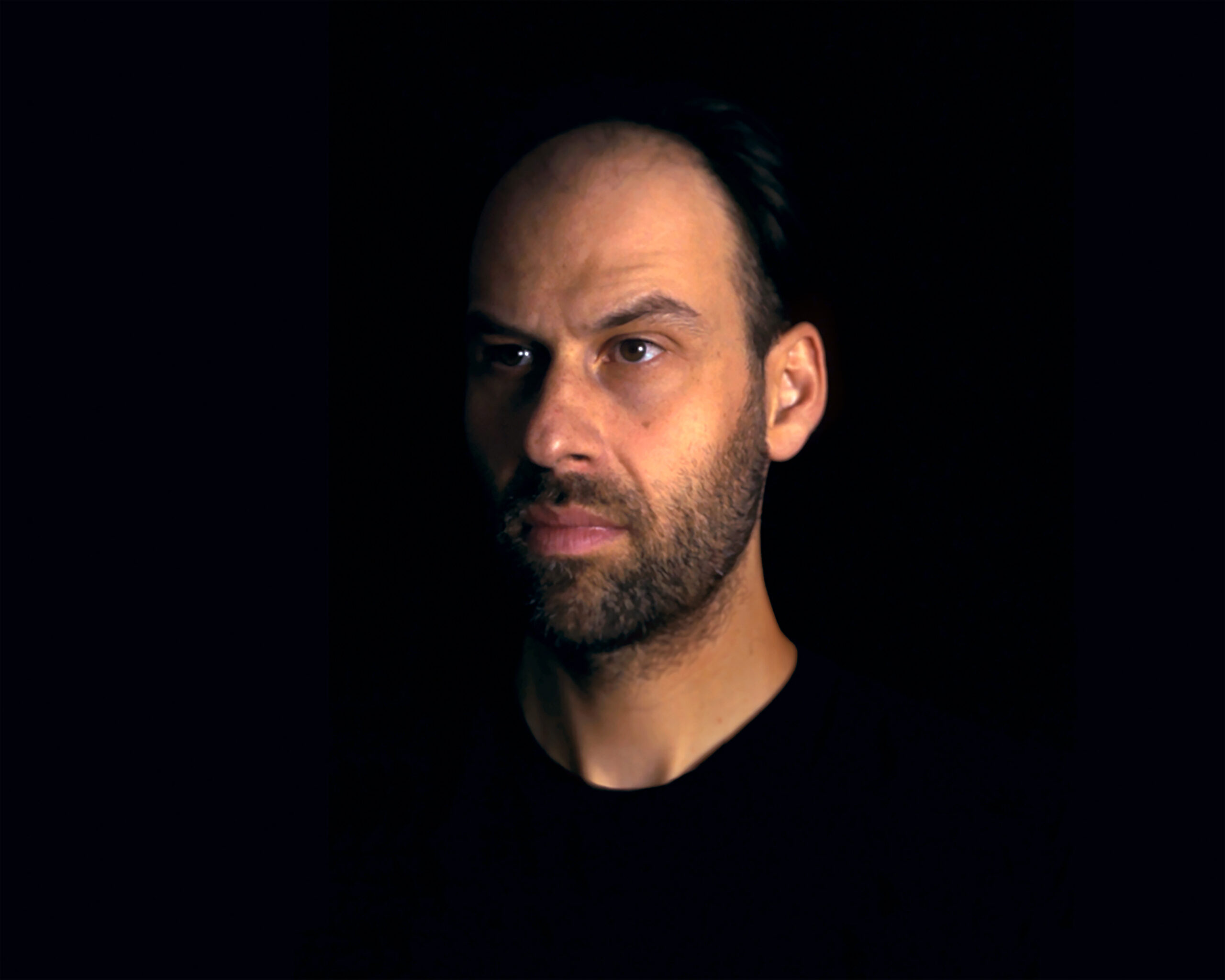
Dr Laura von Vittorelli is a Senior Researcher in Environmental Law and Governance at the Öko-Institut in Berlin. Her work focuses on water law, nature conservation and environmental law, and on how legal frameworks can support the transition towards a climate- and nature-positive society.
Her work combines fundamental legal research with practical policy and legal advice. Recent projects include »Zukunft Umweltrecht 2.0« (The future of Environmental Law 2.0), which explores approaches to making environmental law more resilient in the face of overlapping crises; initiatives on industrial water circularity to safeguard water resources sustainably; an evaluation of fast-track legislation for renewable energy; and work on strengthening soil protection law.
Before joining the Öko-Institut, Dr von Vittorelli worked as an environmental lawyer with ClientEarth Germany and led water policy at BUND, the German Federation for the Environment and Nature Conservation. She completed her doctoral research at the Helmholtz Centre for Environmental Research (UFZ), focusing on European water law.
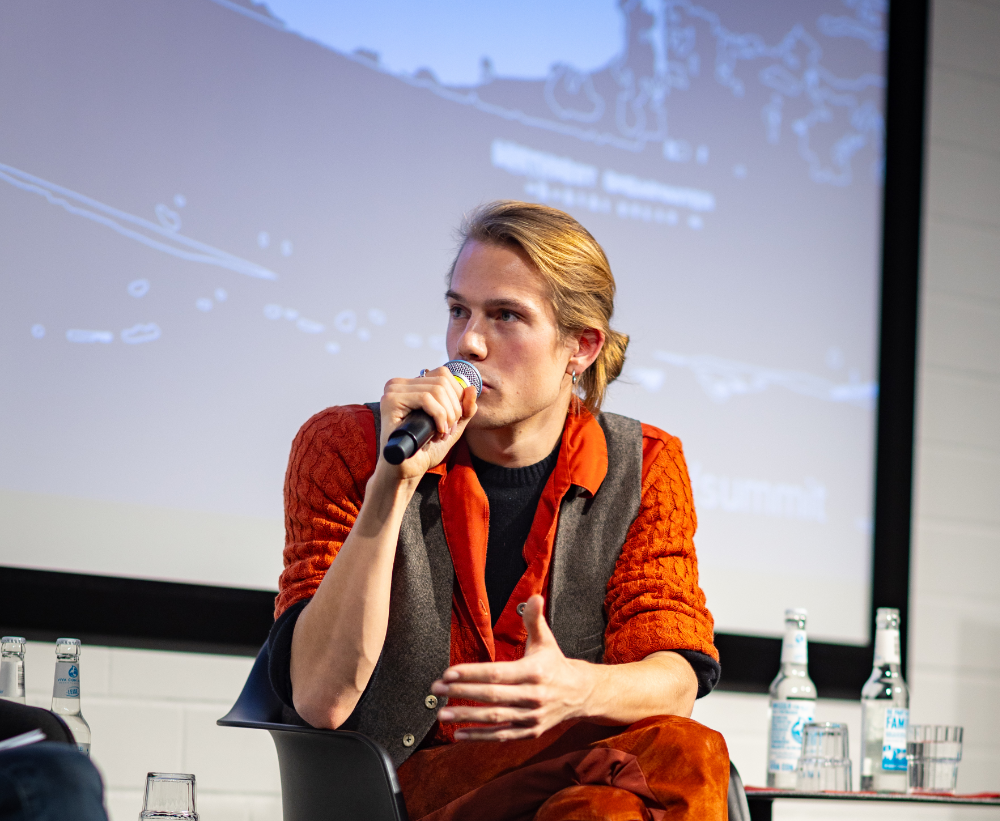
Mika Schachenmayr is 26 years old and, as a climate activist with Fridays for Future, advocates for phasing out fossil fuels and global justice.
Mika studied environmental science and architecture and lives and works in Berlin.
The concert will be recorded by Deutschlandfunk Kultur and broadcast on 3 December at 8 pm.

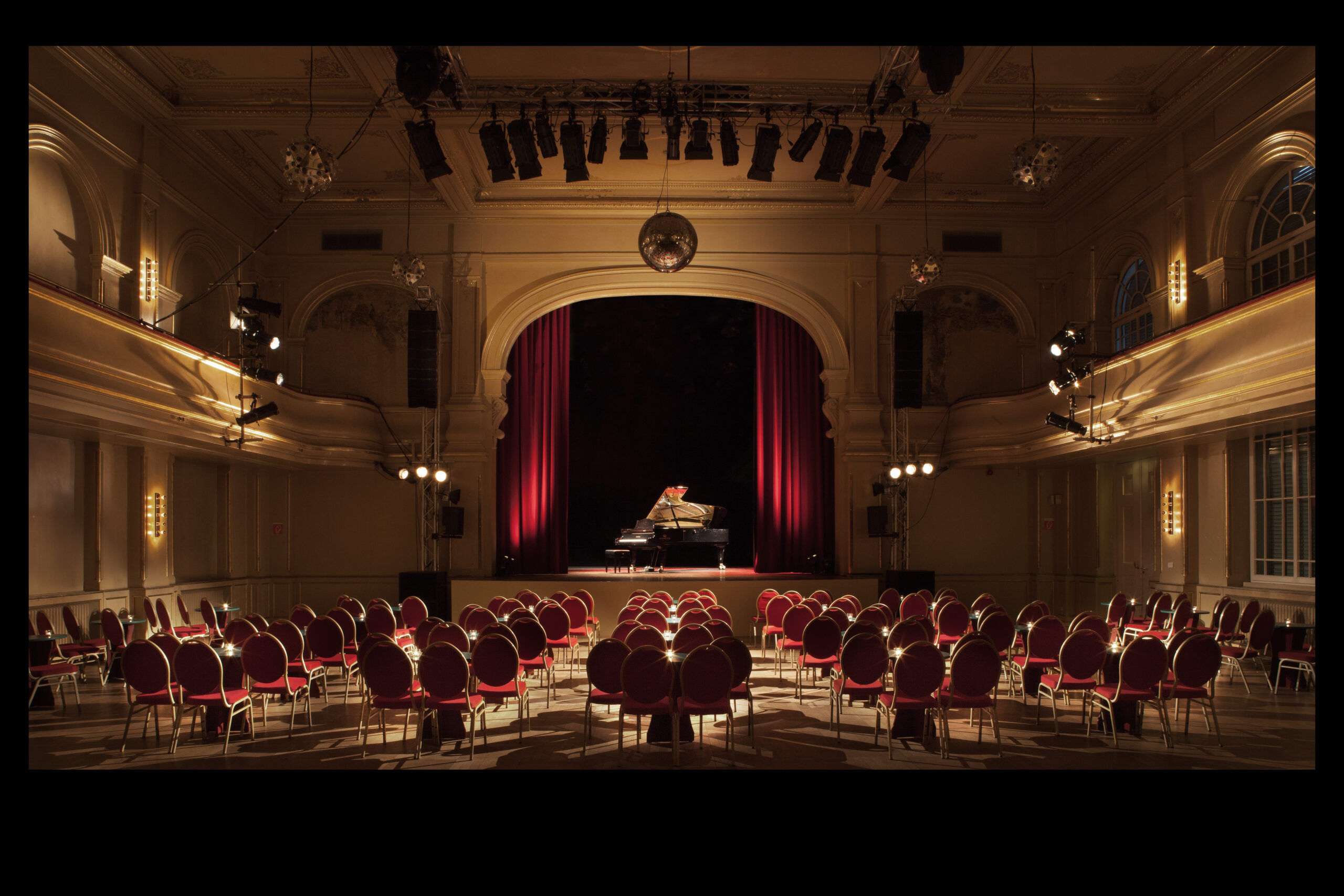
Heimathafen Neukölln has been an established venue for cultural events in Berlin since 2009. From theatre performances and concerts to political debates, this venue in the heart of Neukölln offers its audience a diverse programme. Originally founded by a collective of ten women, Heimathafen sees itself as a ‘laboratory’ for a wide variety of formats. This makes it the ideal venue for our RundfunkchorLounges, which not only delight audiences with surprising musical elements, but also provide a space for stimulating conversation.
Heimathafen Neukölln
Karl-Marx-Straße 141
12043 Berlin
Deutschland

© Benjamin Jenak

© Heimathafen Neukölln

Bleiben Sie immer auf dem Laufenden mit aktuellen Terminen, Konzerteinblicken und Interviews