Interviews
A Word With Vivian Keischgens

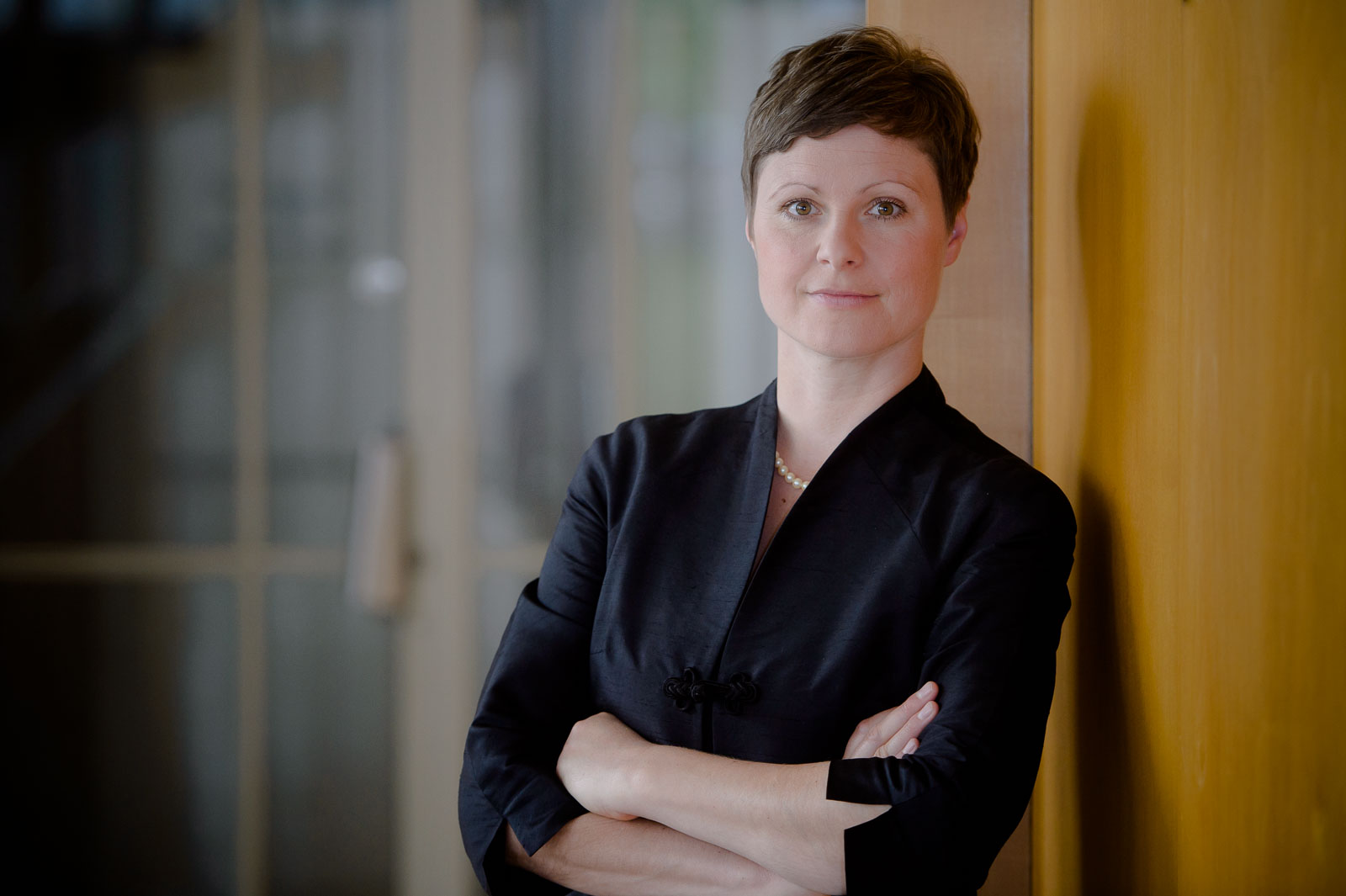
As we approach the finale of our anniversary season, it’s time to introduce the superwoman who made sure our anniversary concerts became unforgettable experiences – with full physical commitment! Literally: besides coordinating ensembles, schedules, and logistics, she often pitched in with stage set-ups and tear-downs herself. Vivian Keischgens, a trained music educator and hobby saxophonist with the Humboldt Bigband in Berlin, joined the Rundfunkchor team in October 2024 as project manager for the anniversary season. Previously, she worked for the Berlin Philharmonic’s children’s and youth choir program Vokalhelden, for the NGO KulturLeben Berlin, and at the Berlin recording studio Rosekick. Originally from the Rhineland, she was more of an »orchestra type« at school, but since her time with Vokalhelden she’s firmly on »team choir« – lucky for us! Here she talks about the making of the anniversary season, its challenges and highlights.
What made you want to take on the project management of the anniversary concerts?
After working mostly with smaller organizations in recent years, I was excited to return to a major cultural institution. Up until then, I had only worked with children’s and youth choirs – never with a professional choir, let alone one with a 100-year history. By the time I joined, the season’s concerts were already planned, so there wasn’t much room to shape the content. But I could see how exciting the programme was going to be, and I really wanted to help celebrate this special birthday.
And what were the challenges?
The biggest challenge was definitely the late start. The position was advertised at short notice, I started on October 1, and on October 2 the first anniversary concert was already taking place – still organized by my colleague Claudia Thao. So I had to get up to speed very quickly: the choir’s history, the season’s program, everything. It felt like jumping straight into the deep end. The first months leading up to the second anniversary concert were intense, fast-paced, and sometimes pretty stressful. But despite all the challenges, it was also great fun – and I was even able to contribute some ideas of my own. For example, the idea for the photo exhibition »100 Years of Rundfunkchor Berlin« was mine.

Besides the four concerts, what else was part of the anniversary programme?
The season brochure was already special – more extensive than usual and highlighting 100 moments from the choir’s history. These moments also appeared on social media, on our website, and in the concert programmes throughout the season. I also coordinated the anniversary ideas competition, which my predecessor Annabell Patt had launched. That meant collecting and sorting all submissions, organising the jury, and preparing the evaluation. The competition was really important to us: even with 100 years of tradition, a wealth of experience in concert formats, and quite a few crossover projects behind us, we still need to ask ourselves what a »choir of the future« should look like and how we can reach audiences beyond our usual circles. Many exciting ideas were submitted, and the winning concept will be presented at the final concert on May 31. As part of the supporting program, there will also be a panel discussion about the hurdles we faced when organising the competition and why it remains so difficult to reach people outside our »bubble«.
So what exactly does project management for a concert involve?
It’s not that easy to pin down, because every day looks a little different. Sometimes you feel like a firefighter, especially in the hot phase right before a concert. Most of it is coordination: organising meetings, filtering the essentials, creating to-do lists. For the third anniversary concert, »Flying Mozart«, there were many teams to coordinate: the Flying Steps, the Rundfunkchor Berlin, the Deutsche Streicherphilharmonie, our artistic team – and everyone works a little differently. Backstage, it was almost more of a crossover project than on stage! My lists included everything from communication to practical details like tuning pianos, booking rehearsal rooms, arranging instrument transport, building the stage, or even labeling the labyrinthine backstage areas. And of course, after the concert everything has to be dismantled and packed up again – which we usually do ourselves.
We’re now heading into the final concert – do you already have a personal highlight from the season?
As exhausting as it was for everyone: »Flying Mozart« was just such a cool project! It was my first and only crossover with the Rundfunkchor, and it was so much fun – plus we got fantastic feedback from performers and audience alike. It was wonderful to see these worlds come together: dancers, singers, and the young musicians of the orchestra. They gave everything during the long days of rehearsals, but still ended each day thanking us because they loved the project so much. Everyone put in so much work, it created a real sense of community – and in the end, it all came together beautifully.

What can the audience look forward to in the final concert?
This one will be a bit more traditional: a-cappella works alongside large-scale pieces with orchestra. The Rundfunk-Sinfonieorchester actually has an even longer history than the choir, so it’s fitting that we close the season together. There will also be a rich supporting programme: a panel discussion on the ideas competition, a screening of the film »human requiem in Eleusis«, the photo exhibition will be on display again, and of course there’ll be food and drinks throughout. So if you like, you can spend the whole afternoon and evening at Konzerthaus Berlin – like a mini festival day.
And what’s the significance of this anniversary in terms of Berlin’s cultural policy?
I think it’s huge. Over the past 100 years, the choir has been part of so many cultural and political events – even instrumentalized during the Nazi era and in the GDR. The fact that a choir can have such a long history shows how important it can be within the cultural landscape. At a time when cultural policy is struggling, it’s almost incredible that we could celebrate an anniversary with more in-house productions than ever before. It sends a strong message: that even through difficult times, institutions like ours can endure and grow. It’s important for the Rundfunkchor to use that visibility not just for itself, but also to support smaller cultural initiatives and individuals who don’t have the same platform.
What do you wish the choir for the next 100 years?
That it keeps moving toward becoming the »choir of the future« – and maybe a little faster than in the past century. Now is the time to take a stand, be bold, and not act like a 100-year-old, but instead use that century of knowledge to push forward. More crossover projects, more new concert formats! »Flying Mozart« showed the potential – now I hope the choir builds on that while continuing its long tradition of professionalism, quality, and artistry.