Interviews
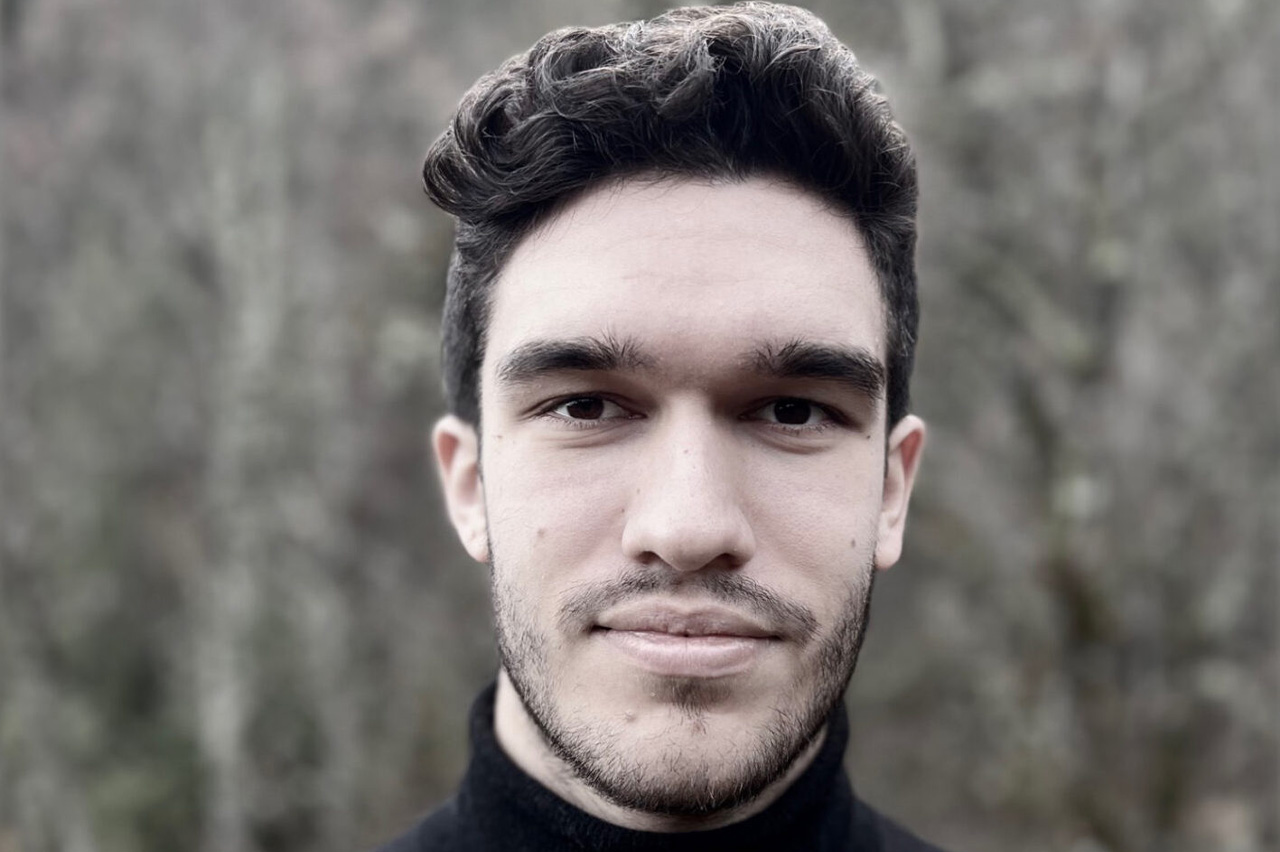
A Word With Justus Barleben On the Schola (2025)

For several years now, Justus Barleben has been assistant to our chief conductor, Gijs Leenaars, taking on many key responsibilities with the Rundfunkchor Berlin: from leading rehearsals and preparing scores to coordinating schedules and much more. He also conducts the choir’s annual Schola, a project that gives student singers the chance to experience the reality of professional ensemble singing in two intensive weeks of rehearsals and performances. Working side by side with the Rundfunkchor Berlin and performing in concert, young singers get first-hand insight into what it means to be a professional choral singer. On April 8, 2025, this year’s Schola concert will take place. Justus has designed a programme around the theme of »Dreams«—and here he gives us a glimpse of what’s in store!

Why is the Schola so important for the Rundfunkchor Berlin?
As a professional choir, we are always looking for highly trained, intelligent, and passionate singers—so we can keep up the choir’s artistic quality for years to come and fill new positions with outstanding talent. That means we need to reach out to young musicians early on, so that the most promising ones discover us in time. Over these two project weeks, we want them to see how exciting and rewarding this career path can be, and what a privilege it is to sing in a choir like ours. It’s crucial that singers begin to figure out how they want to work from an early stage of their education—during their studies or in their first professional years—so they know what it takes to pursue this path. The demands here at the Rundfunkchor Berlin are very particular: from a-cappella programmes to large-scale choral symphonies, we cover a wide range. The Schola is designed to spark their interest and give them a real impulse for their future careers.
How do you select the singers?
On the one hand, I choose them so they’ll function well together as a group—their voices need to blend, especially in an a-cappella concert. On the other hand, technique matters a lot. They should be able to hold their own not only in a-cappella singing, but also in choral symphonic repertoire. With three to five hours of singing per day, they also need enough technical stamina to get through the two weeks successfully. That said, I’m equally looking for talent and personality. If I sense that someone is highly musical, has a solid background in choir singing, and is genuinely excited about the project, I’ll make sure they get their chance.
How does the Schola sound compared to the Rundfunkchor?
That’s not so easy to answer! Young voices naturally have a special color—often somewhat lighter in quality. Our job over those two weeks is to round out that sound, to give it more depth and fullness. At the same time, that lightness brings flexibility, which opens up a broad repertoire. That’s exactly how I shaped the programme for the a-cappella concert: with pieces that really suit these voices and highlight their strengths.
What can we expect in this year’s programme?
I’ve put together a programme on the theme of »Dreams«. The pieces reflect the idea of dreaming in many different ways: dreams as places of longing, dreams in sleep, the feeling of safety inside a dream, but also nightmares and the dreamlike, meditative, almost otherworldly state itself. The repertoire spans from Romantic works to contemporary music. One highlight is Anne Boyd’s »As I Crossed a Bridge of Dreams«, inspired by the dream diary of a Japanese court lady from the 11th century—a beautifully meditative piece. Two central works feature pianist Holger Groschopp: Josef Rheinberger’s »Die Wasserfee (»The Water Fairy«) and Hugo Wolf’s »Die Stimme des Kindes« (»The Child’s Voice«). In Gustav Mahler’s 16-part version of »Die zwei blauen Augen« (»The Two Blue Eyes«) from »Lieder eines fahrenden Gesellen«(»Songs of a Wayfarer«), the Schola singers perform either solo or in pairs per voice part—a real challenge. The programme also includes two Eichendorff settings by French composer Philippe Hersant, as well as sacred works by Max Reger (»Unser lieben Frauen Traum« / »Our Lady’s Dream«) and Johannes Brahms (»Geistliches Lied« / »Sacred Song« with organ). All in all: a dreamlike programme in every sense of the word!
What’s special for you about working with the Schola singers?
What makes it so special is having incredibly talented people in front of me who are also curious and hungry to learn. That combination is just so much fun! The rehearsals are focused and at a very high level, and the singers are completely present in the moment. It’s not an everyday situation—it feels like something truly unique, where I can rehearse with great joy. It’s also inspiring to keep working with new people, to learn from each other, and to see how a group that barely knows each other at the start becomes a true ensemble within two weeks. It’s amazing how quickly music connects: within just a few minutes, a real choral sound emerges. For me, this work is a great privilege, and I’m very much looking forward to the concert!