Venues

Venues in Berlin

Berliner Philharmonie

Philharmonie Berlin, Grand Hall and Chamber Hall

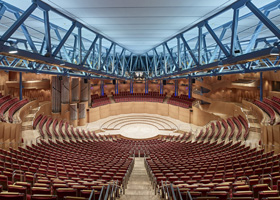
Opened in 1963, the Philharmonie Berlin is one of the icons of modern architecture. Architect Hans Scharoun created a completely new form for the concert hall: the 2,250 seats are arranged in different blocks, terraced like a vineyard, around a five-sided orchestra podium. Beneath the hall is the foyer, whose labyrinthine staircases cause even regular visitors to get lost time and again. The unusual silhouette of the building, whose outer shell is clad in golden aluminium panels, can also be explained by its internal layout. The hall is also considered one of the best in the world in terms of acoustics. It is home to the Berliner Philharmoniker, but is also used by other Berlin orchestras and event organisers.

The Kammermusiksaal (Chamber Hall), located right next to the Philharmonie Berlin, was built between 1984 and 1987 according to plans by Edgar Wisniewski. It was based on a sketch by Hans Scharoun, who also designed the Kulturforum in what was then ‘no man’s land’ near the inner Berlin Wall. The building is reminiscent of the Philharmonie Berlin in many ways, but has an atmosphere of its own. With 1,180 seats, it is rather large for a chamber music hall, yet all seats offer good visibility and acoustics.

Location

Philharmonie Berlin
Herbert-von-Karajan-Str. 1
10117 Berlin
Deutschland

Konzerthaus Berlin

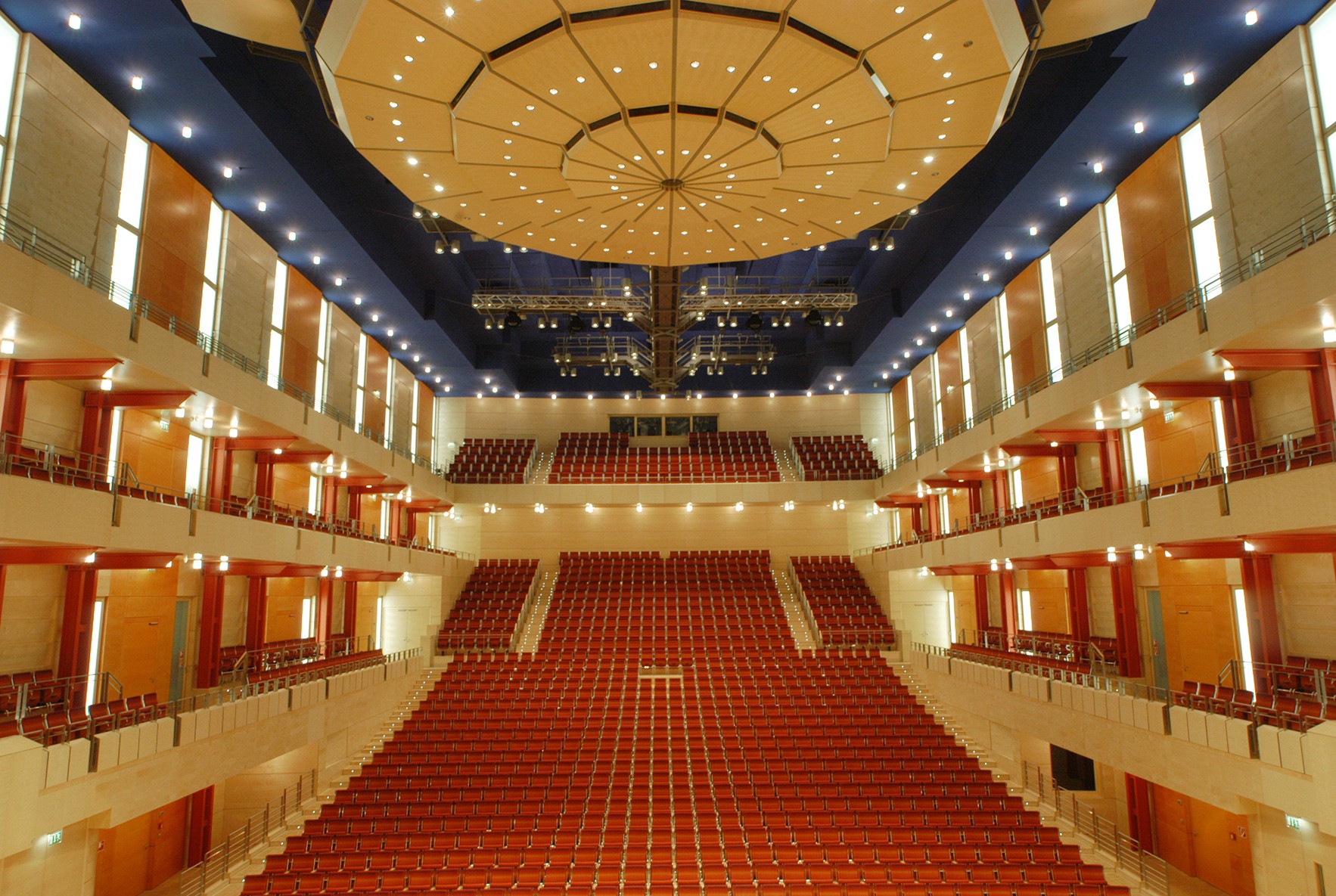
The Konzerthaus on Gendarmenmarkt welcomes its visitors on one of Berlin’s most beautiful squares. Rebuilt in 1984 after being almost completely destroyed in the Second World War, it houses the façade of the Royal Theatre, designed by Karl Friedrich Schinkel, which underwent numerous renovations and rebuilds throughout its history, became known under various names and was used as a cultural institution for both theatre and concert events. In 1821, shortly after its opening, Carl Maria von Weber conducted the premiere of his opera »Der Freischütz« here; Ludwig van Beethoven’s 9th Symphony was also performed here for the first time in Germany in 1826. During the renovation in the 1980s, the interior of the building was completely redesigned – until 1945, the stage was located in the middle of the building, with a backstage area adjoining it. From 1918 onwards, the building mainly used for theatre, before it was rebuilt and opened in its current form as a concert hall. Klaus Mann’s book »Mephisto« and István Szabó’s film of the same name are set here. The model for today’s Great Hall, which seats 1,600, was the much smaller concert and ballroom in the side wing of the Schinkel building. (There is also a Small Hall for chamber music and the modern Werner Otto Hall.)

Location

Konzerthaus Berlin
Gendarmenmarkt
10117 Berlin
Deutschland

Heimathafen Neukölln

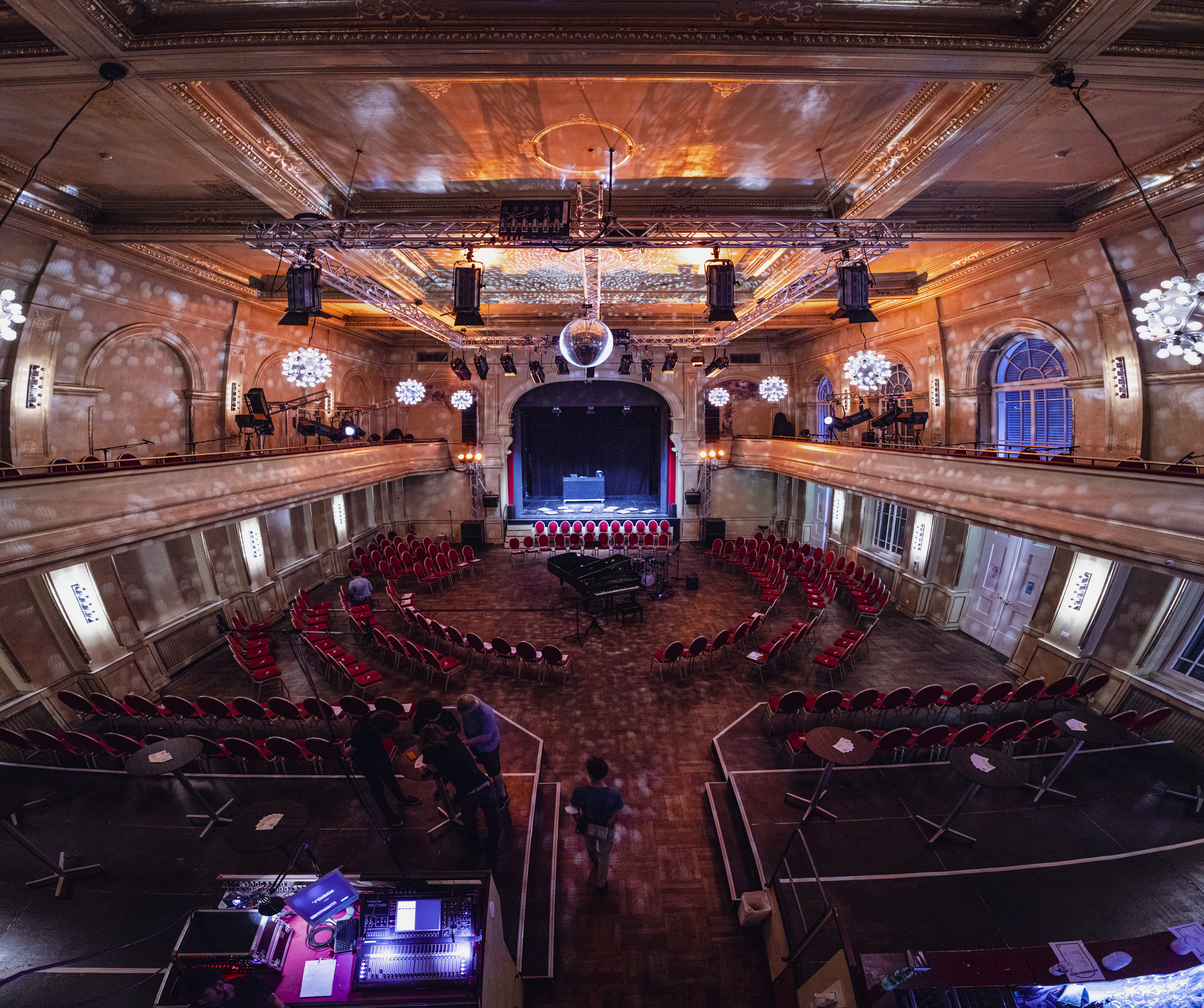
Heimathafen Neukölln has been an established venue for cultural events in Berlin since 2009. From theatre performances and concerts to political debates, this venue in the heart of Neukölln offers its audience a diverse programme. Originally founded by a collective of ten women, Heimathafen sees itself as a ‘laboratory’ for a wide variety of formats. This makes it the ideal venue for our RundfunkchorLounges, which not only delight audiences with surprising musical elements, but also provide a space for stimulating conversation.
Location

Heimathafen Neukölln
Karl-Marx-Straße 141
12043 Berlin
Deutschland

Berliner Dom (Berlin Cathedral)

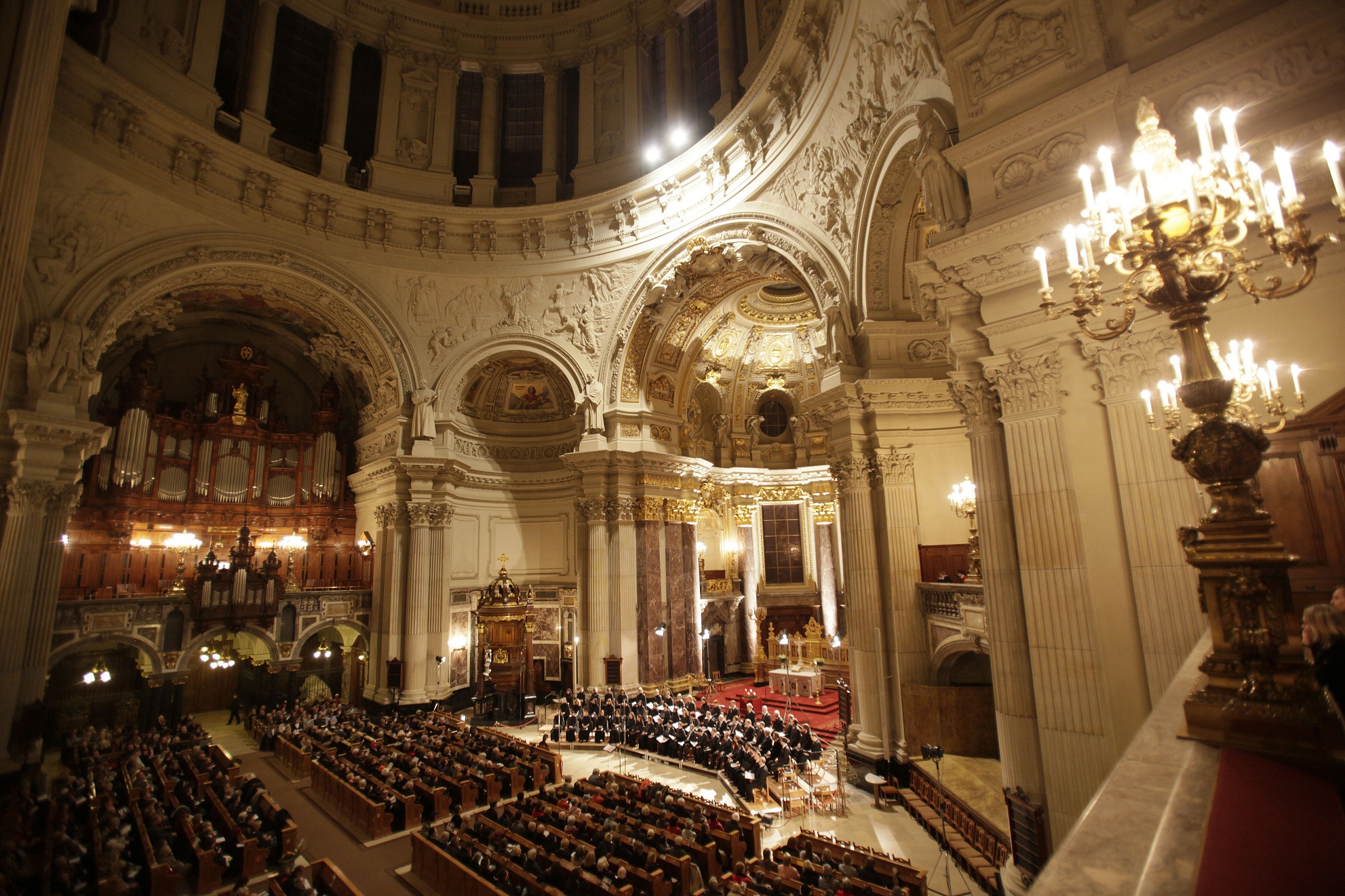
The Berliner Dom is the largest church of the city of Berlin and the traditional location for the annual Christmas concert of the Rundfunkchor Berlin. Its history dates back to the late Middle Ages, when a cathedral chapter was founded at the palace chapel. The current building, prominently located between the palace and the buildings of Museum Island, was not inaugurated until 1905. It is considered a major work of Wilhelmine Baroque architecture. Severely damaged in 1944, the church was restored with a simplified dome and only returned to use in 1993. The Sauer organ, which was planned and built at the same time as the church, is considered the largest original late Romantic organ in the world. A special attraction is the Hohenzollern crypt with the sarcophagi of several Brandenburg electors and Prussian kings.

Location

Berliner Dom
Am Lustgarten
10178 Berlin
Deutschland

Heilig-Kreuz-Kirche Berlin

Heilig-Kreuz-Kirche Berlin

Built between 1885 and 1888 in Gothic style, the Protestant Heilig-Kreuz-Kirche was extensively renovated and converted in 1995 for both ecclesiastical and secular use. The light-flooded brick church with flexible steel, glass extensions and variable seating can be used in a variety of ways for concerts, presentations, conferences, receptions and galas, accommodating up to around 430 participants. For several years, the Heilig-Kreuz-Kirche has been the permanent venue for the Schola of the Rundfunkchor Berlin. The church is centrally located in Kreuzberg on Blücherplatz, near the American Memorial Library and Potsdamer Platz.

Location

Heilig-Kreuz-Kirche Berlin
Zossener Straße 65
10961 Berlin
Deutschland

Radialsystem bei Sonnenuntergang

Radialsystem

Radialsystem in Berlin is a place for art and collective action, where different cultural traditions and forms of knowledge meet in vibrant dialogue. As an anchor institution of Berlin’s independent scene, new forms of artistic expression are developed, practised and presented here. Since its founding, Radialsystem has made an international impact, particularly in the fields of choreography, music theatre and concerts. At the intersection of art, science and society, Radialsystem offers a resonant space for cultural and social discourse and acts as a catalyst for negotiating and envisioning new realities. The unique architecture of the venue opens up various spatial constellations and inspires creative processes. In addition, the potential of this location directly on the Spree is valued in the commercial rental sector by partners from politics, business, science and media.

Location

Radialsystem
Holzmarktstr. 33
10243 Berlin
Deutschland

Velodrom Berlin

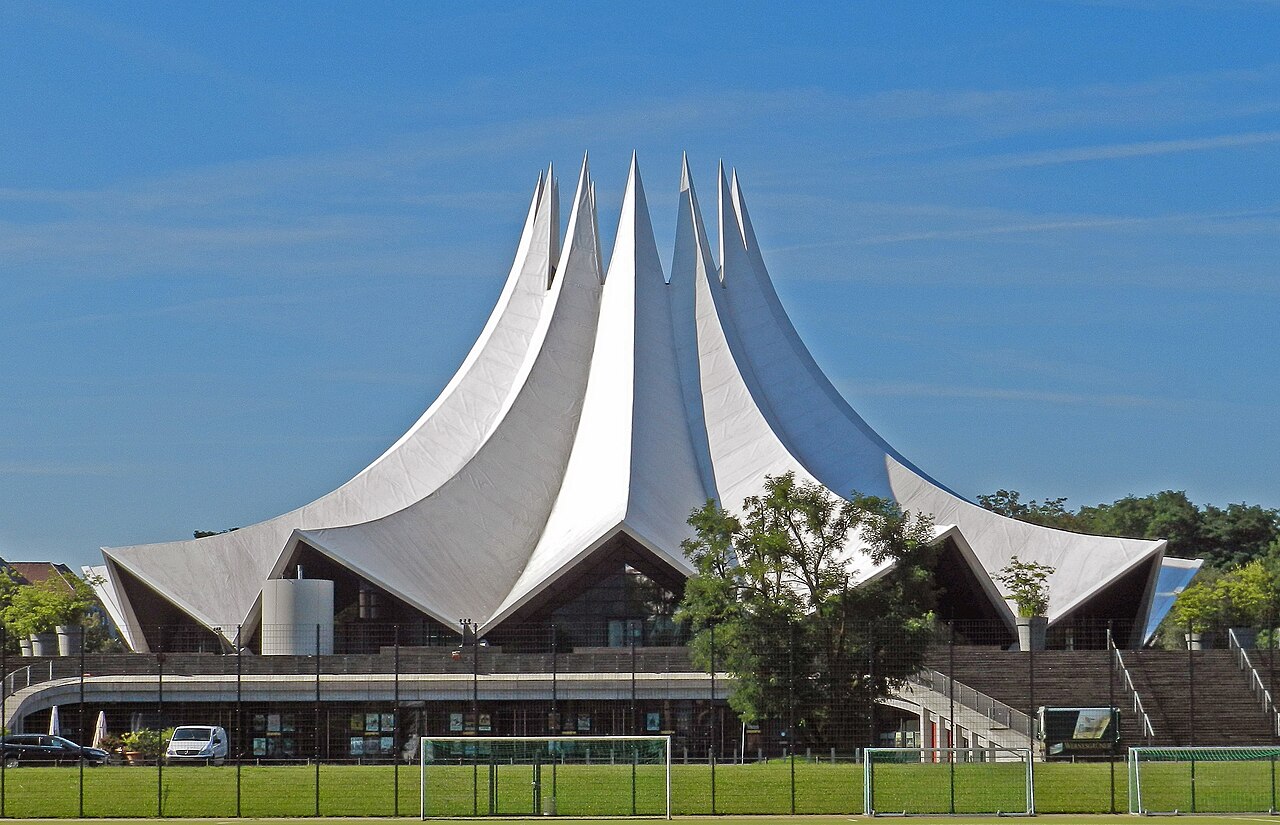
The Velodrom is one of Berlin’s most dynamic venues – architecturally striking, highly versatile, and rich in cultural diversity. Originally built for major sporting events, it has since evolved into a stage for concerts, shows, and international gatherings. With capacity for up to 12,000 guests and a distinctly urban character, the Velodrom is a cornerstone of Berlin’s event scene – where modern city culture truly comes alive.

Location

Velodrom Berlin
Paul-Heyse-Straße 26
10407 Berlin
Deutschland

Airport Berlin-Tempelhof, Hangar 4

Berlin-Tempelhof Airport, built between 1936 and 1941, was the largest building in the world at the time, with 307,000 square metres of floor space and a roof that could accommodate up to 80,000 spectators for air shows. While the airport served as a monumental showcase for National Socialism, it became a symbol of freedom in the post-war period with the Berlin Airlift. Since its closure in 2008, the seven hangars have been used to house refugees, social projects and cultural and sporting events, among other things.

Location

Flughafen Berlin-Tempelhof, Hangar 4
Columbiadamm 10
12101 Berlin
Deutschland

Mall of Berlin (Piazza)

Opened in 2014, the Mall of Berlin is located directly on Leipziger Platz on the site of the former Wertheim department store. At the centre of the shopping mall is the Piazza – a glass-roofed courtyard that is regularly used as a stage for events. Surrounded by shops and restaurants, the Piazza provides an urban backdrop for concerts, pop-up performances and other cultural events. The venue thus combines everyday life with cultural life and opens up new spaces for temporary stage formats in the heart of the city.

Location

Mall of Berlin (Piazza)
Leipziger Platz 12
10117 Berlin
Deutschland

Venues for Guest Performances

Westfalenhalle Dortmund

Westfalenhalle Dortmund

The historic Westfalenhalle has been one of Dortmund’s premier event venues for decades. From concerts and trade fairs to major sporting competitions—virtually every kind of gathering finds its stage here. Its iconic dome has become a true landmark of the city, drawing visitors from across the region and beyond.

Location

Westfalenhalle Dortmund
Rheinlanddamm 200
44139 Dortmund
Deutschland

Stadtcasino Basel, Außenansicht

Stadtcasino Basel

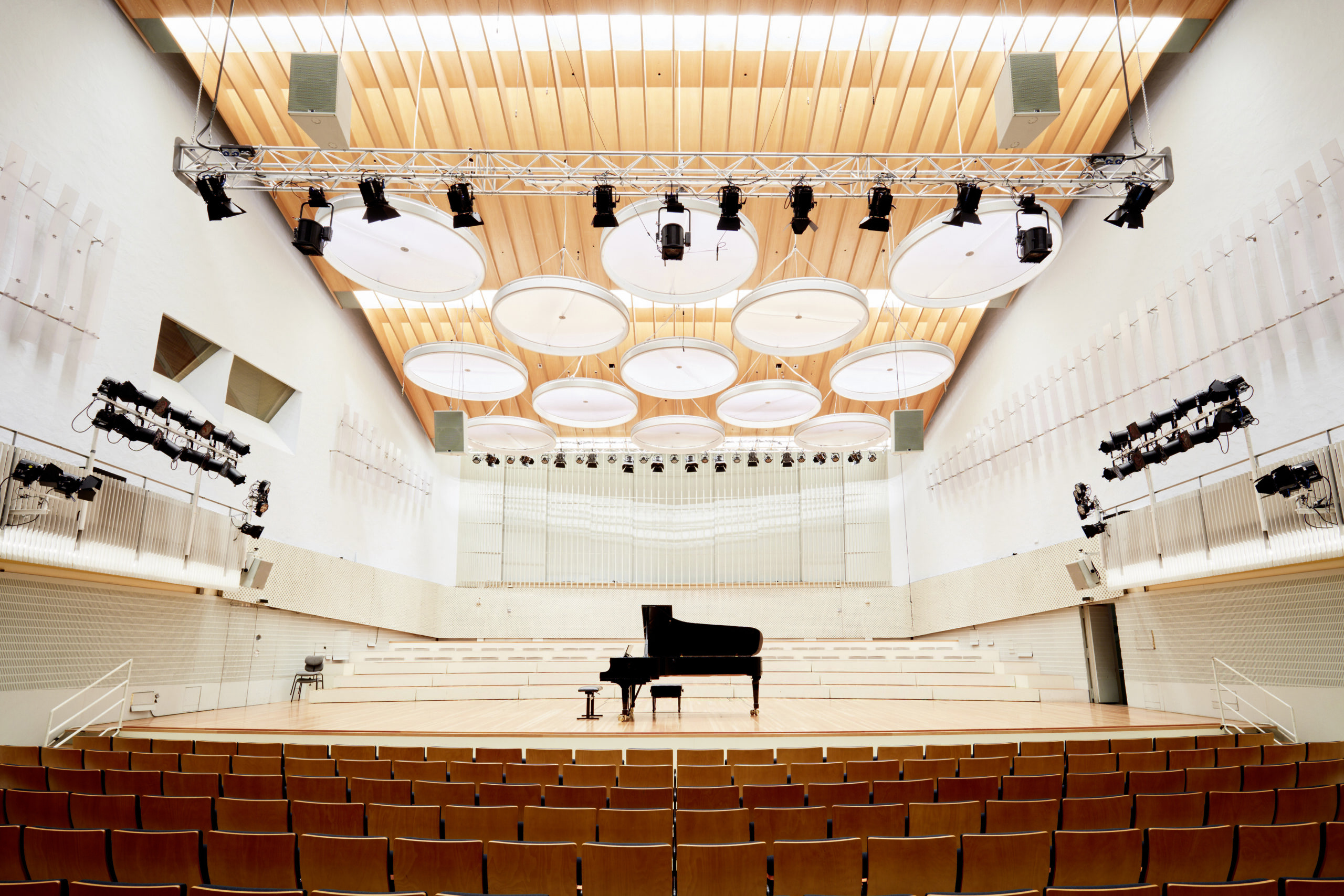
The Stadtcasino Basel reopened in 2020 after extensive refurbishment. The historic music hall from 1876, known for its excellent acoustics, was also carefully restored and enhanced with modern elements. The auditorium offers seating for approximately 1,500 guests across the stalls and two balconies. As the home of the Basel Symphony Orchestra, the Stadtcasino stands as one of the city’s premier venues for classical music.

Location

Stadtcasino Basel
Konzertgasse 1
4051 Basel
Schweiz

Lithuanian Exhibition and Congress Centre LITEXPO

Lithuanian Exhibition and Congress Centre LITEXPO

The Lithuanian Exhibition and Congress Centre LITEXPO in Vilnius is the largest exhibition and event venue in the Baltic States, and an important cultural hub. Alongside international trade fairs and political forums, it regularly hosts concerts, exhibitions, and major cultural events. With more than 33,000 square meters of exhibition space, LITEXPO provides a versatile setting for a wide range of formats and serves as a key meeting point for business, politics, and culture across the region.

Location

Lithuanian Exhibition and Congress Centre LITEXPO
Laisvės pr. 5
04132 Vilnius
Lithuania


Großes Festspielhaus Salzburg

Opened in 1960, the Großes Festspielhaus in Salzburg was designed by Clemens Holzmeister as a venue dedicated to the festival. The building, which is rather simple in appearance from the outside, nestles against the wall of the Mönchsberg and opens up to a spacious auditorium with almost 2,300 seats. The stage is one of the largest in the world and allows for elaborate opera and concert productions. The clear spatial effect, precise acoustics and flexible usability make the theatre one of the most important venues for classical music in the German-speaking world.

Location

Großes Festspielhaus Salzburg
Hofstallgasse 1
5020 Salzburg
Österreich

Elbphilharmonie Hamburg

Elbphilharmonie Hamburg

The Elbphilharmonie Hamburg, opened in January 2017, was designed by the Swiss architectural firm Herzog & de Meuron. Standing in the middle of the Elbe River on around 1,700 reinforced concrete piles, the new landmark of the Hanseatic city houses three concert halls, a hotel, private apartments and a publicly accessible plaza that offers visitors a unique panoramic view of the city. The heart of the Elbphilharmonie is its Grand Hall, which rises 25 metres between the 12th and 16th floors of the building like a vineyard. No listener is more than 30 metres away from the conductor. The ‘white skin’ on the balconies, designed by Japanese star acoustician Yasuhisa Toyota, ensures targeted sound diffusion.

Location

Elbphilharmonie
Platz der Deutschen Einheit 1
20457 Hamburg
Deutschland